
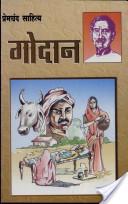
Godan
Premchand · 1880–1936 · India
Originally Godaan (Hindi) · translated by Gordon C. Roadarmel
Why it matters
A poor farmer's lifelong dream of owning a cow is crushed by debt, caste, and an unjust order. Premchand's final novel is the great work of rural Indian realism: tender, unflinching, foundational to Hindi fiction.
At a glance
Straightforward realist narration; the difficulty lies in its social weight, not its prose.
Deep dive
Why owning a single cow becomes the measure of dignity that debt, caste, and custom conspire to keep permanently out of Hori's reach.
Written for readers who have finished the book. No plot recap, and nothing here is safe to read first.
Themes & symbolism
Owning a cow is, for Hori, the minimum unit of dignity in village life — milk for the household, a mark of not being destitute — and every attempt to get one destroys him further: he buys one on credit he can't service, his jealous brother poisons it, and the debt from that first failed purchase metastasizes through moneylenders, landlord dues, and caste fines until it outlives the animal itself. Premchand structures the plot so the cow is never really the point; it's the pretext that reveals how thoroughly debt, not ambition or laziness, dictates the shape of a poor farmer's life. Every institution that touches Hori — the panchayat, the temple, the zamindari system, the market — extracts from him in the name of some obligation he can't refuse without losing what little standing he has left, so that his ruin looks, from any single transaction, almost reasonable.
The novel intercuts Hori's village world with an urban plot around the landlord Rai Sahib and his circle, whose Gandhian reformist talk and social ambitions turn out to rest on their own debts and hypocrisies — exploitation reproduces itself identically at the top of the system, just with better manners. Against this, Hori's wife Dhania is the moral center: she takes in Silia, a lower-caste woman pregnant by their son Gobar, over the village's outrage, and repeatedly says aloud what Hori's exhausted deference won't let him — that the caste and credit systems grinding them down are unjust, not simply unlucky. Where Hori keeps apologizing his way deeper into debt, unable to imagine refusing what custom demands of him, Dhania's refusals are the novel's closest thing to an alternative — proof the system isn't natural law, just habit enforced by fear.
Founding Hindi Realism
Godan, Premchand's last completed novel, marks a turn in his own career from earlier reform-minded fiction toward an almost documentary fatalism about rural economic structure — debt, caste obligation, and land revenue functioning as impersonal, near-mechanical forces rather than villains any single reform could fix. That shift is why the novel is treated as the foundation stone of Hindi social realism: later Hindi fiction's turn toward unsentimental rural subject matter runs back through this book specifically.
A Title That Names an Absence
Godan means "the gift of a cow," naming a ritual the novel makes sure the reader understands in full before withholding it: the gift is meant to ease a soul's passage, a last act of piety a family performs for its dead. By titling the book after a rite Hori's family cannot afford to complete, Premchand turns the title itself into a standing irony that the plot only pays off in its final page — the reader carries the word "gift" through four hundred pages of accumulating debt before discovering exactly what it costs to be denied one.
The last seal: what actually happens, and why it lands the way it does.
The ending, explained
Worn down by decades of debt and forced labor, Hori collapses in the fields and dies. Tradition requires a godan on the deathbed — the ritual gift of a cow to a Brahmin priest, necessary for the funeral rite to be performed properly — but the family cannot afford one. In the novel's final and bitterest irony, Dhania offers the priest what few coins she has instead of the animal the title names and Hori's entire life orbited: the one thing his existence was organized around chasing turns out to be exactly what's missing at the moment tradition says he needs it most.
Where to go next
 Premchand · 1927NirmalaLvl 3Medium pace
 Premchand · 1931GabanLvl 3Fast paced
 Mahasweta Devi · 1974Mother of 1084Lvl 5Medium pace
 Ismat Chughtai · 1942The Quilt and Other StoriesLvl 4Fast paced