

Before Night Falls
Reinaldo Arenas · 1943–1990 · Cuba
Originally Antes que anochezca (Spanish) · translated by Dolores M. Koch
Why it matters
Dying of AIDS in New York, Arenas dictated his memoir into a tape recorder, tracing persecution, prison, and desire from Castro's Cuba to exile. A final act of defiance: his suicide note blamed the regime for his death.
At a glance
A frank, chronological memoir told in plain, urgent prose despite its harrowing content.
Deep dive
A Cuban writer narrates his own life from childhood poverty through literary success, prison, and exile, in a country whose revolution he initially welcomed and which spent decades afterward trying to make him disappear for exactly who he was.
Written for readers who have finished the book. No plot recap, and nothing here is safe to read first.
Themes & symbolism
Arenas structures his memoir around a repeated pattern of persecution intensifying in direct proportion to his refusal to hide: an early, genuine enthusiasm for Fidel Castro's revolution curdles once its cultural bureaucracy begins banning his fiction and criminalizing homosexuality outright, and Arenas keeps writing and keeps having sex with men anyway, smuggling manuscripts out of the country by hand when official channels close to him entirely. His arrest, triggered after he reports being robbed by two men he'd slept with and the police charge him instead, functions in the memoir as the regime's whole logic in miniature: institutions nominally meant to protect citizens turned reflexively against the ones the state has already decided don't deserve protection.
Arenas's account of imprisonment at El Morro, alongside descriptions of the forced labor camps used against gay men in earlier years, refuses to soften what he witnessed and endured, presenting state violence against sexuality as continuous with, not separate from, the regime's political repression of writers and dissidents generally. The memoir insists throughout that his homosexuality and his writing were punished by the same apparatus for the same underlying reason, an inability to control a person who kept insisting on being fully, visibly himself.
Arenas also uses the memoir to settle accounts with figures he saw as complicit, fellow writers who informed on colleagues or stayed conveniently silent while others were jailed, and his frankness about those betrayals keeps the book from reading as a simple martyr's account. He is just as willing to describe his own opportunism, borrowed manuscripts, seductions used as leverage, favors traded for safety, as he is to describe what the state did to him, and that unsparing self-portrait is what gives the persecution narrative its credibility: a man this honest about his own compromises has little reason to exaggerate his enemies' cruelty.
Dictating a Life Against a Closing Clock
Arenas escaped Cuba during the 1980 Mariel boatlift, one of thousands the government allowed to leave, deliberately including former prisoners and people it had already marked as undesirable, and spent his final years in New York, ill with AIDS, dictating this memoir as his health failed. That circumstance shapes the book's urgency directly: this is a life recounted by someone racing a second, medical persecution after having already survived a political one, and the prose carries that pressure, precise about the facts of his suffering, largely unsentimental about his own body's decline, because there was no time left for anything but the record itself.
The last seal: what actually happens, and why it lands the way it does.
The ending, explained
Arenas ends the memoir shortly before his actual death in 1990, having taken his own life in his New York apartment as his AIDS symptoms became unbearable, and left behind a public letter blaming Fidel Castro directly for a life of persecution he held responsible, in significant part, for the isolation and suffering of his final years. The memoir doesn't narrate that suicide as an event so much as arrive at the edge of it, the writing itself functioning as Arenas's last available act of self-determination, a man who had spent his whole life refusing to let a state control his body or his voice choosing, in the end, the terms of his own departure rather than surrendering that choice to illness alone.
Where to go next
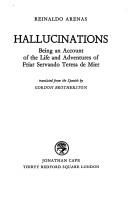 Reinaldo Arenas · 1969HallucinationsLvl 7Fast paced
 Elena Poniatowska · 1971Massacre in MexicoLvl 5Medium pace
 Sergio Pitol · 1996The Art of FlightLvl 7Slow burn
 Jorge Ibargüengoitia · 1977The Dead GirlsLvl 4Fast paced
 Manuel Puig · 1976Kiss of the Spider WomanLvl 6Fast paced
 Gabriel García Márquez · 1967One Hundred Years of SolitudeLvl 6Medium pace