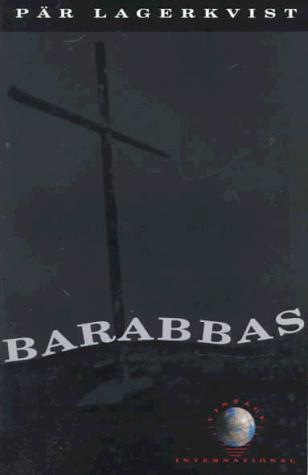
Barabbas
Pär Lagerkvist · 1891–1974 · Sweden
Originally Barabbas (Swedish)
Why it matters
The criminal freed in Christ's place wanders the ancient world for the rest of his life, unable to believe and unable to stop searching. Existentialist theology compressed into a taut, parable-like short novel.
At a glance
Spare parable prose, though its theological ambiguity rewards rereading.
Deep dive
The man freed instead of Jesus spends the rest of his life carrying a mark he never chose and a faith he can't manage to have, and Lagerkvist stays with him for every unbearable year of it.
Written for readers who have finished the book. No plot recap, and nothing here is safe to read first.
Themes & symbolism
Barabbas owes his life to an accident of crowd politics: no gospel account gives him a reason for his freedom beyond a shout going the other way, and Lagerkvist takes that arbitrariness as his whole subject rather than a detail to explain away. Freed and unable to leave the hill, Barabbas climbs to watch the crucifixion from a distance, sees the sky darken at midday exactly as the man he's replaced dies, and cannot make himself either believe what he's just witnessed or dismiss it. That refusal to land on either side, belief or unbelief, defines every year that follows: he's not an atheist and not a convert, just a man permanently unsettled by an event he has no framework to interpret.
Enslaved and sent to the copper mines, Barabbas gets a slave's mark burned into his forehead, a second, literal brand layered onto the invisible one he already carries from Golgotha, and Lagerkvist uses it to keep the question of marking, chosen versus imposed, running through the whole book. His closest tie to the growing Christian community is Sahak, a fellow slave whose faith is total where Barabbas's stays stalled at the threshold; when Roman authorities arrest them both for the association, Barabbas denies knowing Sahak to save himself, a plain echo of Peter's denial staged so that Lagerkvist's least devout character repeats scripture's most human failure.
A Word He Can't Read
When another prisoner presses a small lead disk into his hand, scratched with the words Christos Iesus, Barabbas can't read it, having never learned his letters, and he carries the disk for years without knowing what it says, showing it to strangers and asking them to read it aloud as though the words might finally take if spoken by someone else's mouth. The disk becomes Lagerkvist's tightest image for Barabbas's whole relationship to faith: proximity without comprehension, carrying the right object without ever being able to access what it means on his own.
The last seal: what actually happens, and why it lands the way it does.
The ending, explained
Sahak is thrown to the arena for refusing to renounce his faith, and Barabbas, spared once more by the same arbitrary mercy that saved him on Golgotha, drifts eventually to Rome, where he's caught up in the aftermath of the fire Nero blames on the city's Christians. Mistaken for one of them though he still can't say he believes, Barabbas is crucified alongside the community he spent his life failing to join. Dying, he speaks the same words attributed to the man he was freed instead of, offering his soul into what Lagerkvist describes only as the darkness, giving Barabbas the exact gesture of faith without ever confirming that anyone was there to receive it. The ambiguity is the whole book's argument: belief, for Barabbas, was never a door he walked through, only one he died still knocking on.