
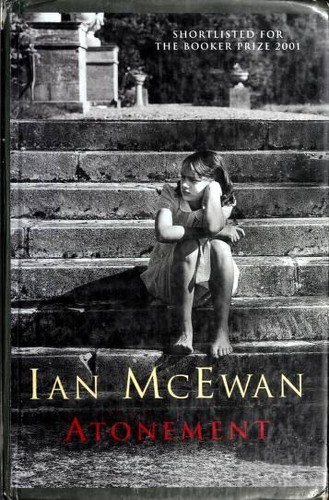
Atonement
Ian McEwan · b. 1948 · England
Why it matters
A thirteen-year-old's misreading of one moment sends an innocent man to prison and shadows three lives. McEwan's finest, ending with a twist about fiction's power (and failure) to make amends.
At a glance
Shifting perspectives and a late metafictional twist demand retrospective rereading.
Deep dive
How a novelist's compulsion to resolve ambiguity into plot, planted in one girl's mind at thirteen, becomes the moral case the entire book is quietly building against her.
Written for readers who have finished the book. No plot recap, and nothing here is safe to read first.
Themes & symbolism
Briony's crime is a novelist's crime before it's anything else: she takes a scene she's too young to fully understand — Cecilia undressing at the fountain, the library encounter with Robbie — and imposes a narrative certainty on it that the actual evidence doesn't support, then testifies to that invented certainty as fact. McEwan is explicit that this is a failure of imagination masquerading as its opposite; thirteen-year-old Briony has just enough novelistic instinct to construct a compelling story and not nearly enough humility to doubt it. The tragedy that follows — Robbie's imprisonment, his conscription, the war that kills him — is class working exactly as English class always works in this kind of story: a servant's son's word counts for nothing against a frightened, imaginative, well-spoken child of the house.
The Dunkirk sections, rendered in unbroken, nightmarish detail, exist partly to earn the scale of what Briony's lie actually cost — not an abstraction but specific mud, specific corpses, a specific young man who might otherwise have had an ordinary life. Cecilia's own exile from her family, and her steadfast refusal to forgive Briony without evidence of real remorse, keeps the novel from letting its narrator off easy even before the final reveal recontextualizes everything.
The scene Briony can't stop rewriting
McEwan builds the entire novel around a single method: showing the same charged moment — the fountain, the library — from more than one vantage point, so the reader experiences firsthand how confidently a story can be misassembled from true but incomplete evidence. Briony's error isn't stupidity; it's precocity misapplied, a child novelist's compulsion to resolve ambiguity into plot rather than sit with not-knowing. That's what makes her such a devastating narrator for this particular story: the same imaginative gift that lets her write a redemptive final chapter decades later is the gift that destroyed Robbie and Cecilia in the first place, which is exactly McEwan's point about fiction's power cutting both ways.
Class does its damage quietly underneath the central error. Robbie is educated alongside the Tallis children, financed by Briony's father, treated almost as family — until a crisis arrives and the household's real hierarchy reasserts itself instantly, with a servant's son's word counting for nothing against a frightened, well-spoken child of the house. The novel never states this as an argument; it simply lets the speed of everyone's certainty about Robbie's guilt do the work.
The last seal: what actually happens, and why it lands the way it does.
The ending, explained
The elderly Briony, a successful novelist now losing her memory to vascular dementia, reveals that the reunion scene between Cecilia and Robbie — the one that seemed to offer partial redemption — never happened. Robbie died of septicemia at Dunkirk before evacuation; Cecilia died soon after in the Balham tube station bombing. The lovers were never reunited, and Briony's fictionalized atonement never took place outside the pages she wrote. She explains she gave them the ending life denied them because she couldn't bear to end her final book with both dying alone and unreconciled with her. McEwan's twist asks whether that's atonement at all, or just a novelist's last, most persuasive lie — a comfort that changes nothing for the dead, however much it comforts the living reader.
Where to go next
 Ian McEwan · 1998AmsterdamLvl 4Fast paced
 Pat Barker · 1991RegenerationLvl 4Medium pace
 Penelope Lively · 1987Moon TigerLvl 6Medium pace
 Graham Swift · 1996Last OrdersLvl 5Medium pace
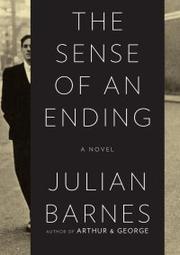 Julian Barnes · 2011The Sense of an EndingLvl 4Medium pace
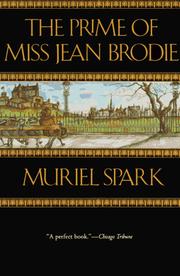 Muriel Spark · 1961The Prime of Miss Jean BrodieLvl 4Fast paced