Greek Drama
Athens invents tragedy and comedy on one stage, at one festival, in under a century and a half.
Greek drama was civic ritual before it was literature: tragedies premiered competitively at the City Dionysia, a festival honoring the god of wine and transformation, judged by the citizens themselves. Aeschylus built the tragic trilogy (three linked plays following one house's curse to its resolution) and gave the form its first architecture of guilt and consequence. Sophocles tightened the machine: Oedipus Rex is built so that every answer the hero seeks is the answer that destroys him, and Aristotle would later reverse-engineer his whole theory of catharsis from watching it work.
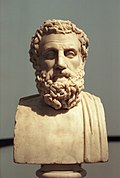
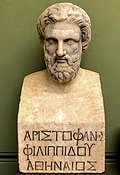
Euripides pushed tragedy toward psychological extremity and moral doubt (Medea makes an infanticide almost persuasive) while Aristophanes' Old Comedy answered with the opposite instinct: bawdy, topical, willing to put the gods, the generals, and the audience itself on stage and mock them by name. Between tragedy's terror and comedy's license, Athens invented the two poles drama has worked between ever since.
How to spot it on the page
- A chorus that comments, laments, and interprets the action from outside it
- The tragic trilogy: three plays tracing one family's guilt to its resolution
- Recognition and reversal arriving in the same devastating instant
- Violence kept offstage, reported by a messenger rather than shown
- Old Comedy's willingness to name and mock living public figures directly
- A civic festival setting where drama is judged as competition, not private entertainment
What it left behind
The City Dionysia stopped producing new work as Athens's power waned, but its two invented modes never left the stage: tragedy's structure of hidden guilt revealed too late runs through Shakespeare and Ibsen to modern drama's every family secret, while Aristophanes' willingness to name names survives in satire from Swift to late-night television. Western theatre has yet to discover a third fundamental mode.
Defining works
For a guided order with notes, follow the reading path →
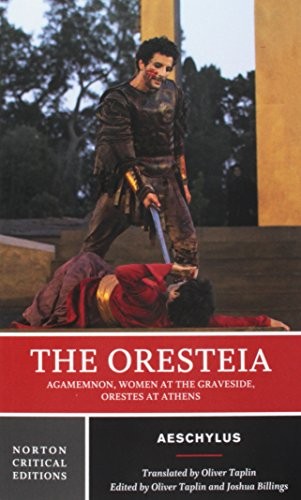
Aeschylus · 458 BCE
Agamemnon returns from Troy to a household that has spent ten years rehearsing its revenge, and one act of violence begets another until an entire royal house is consumed by blood-debt. The only surviving Greek trilogy, and drama's founding argument that justice must replace vengeance.
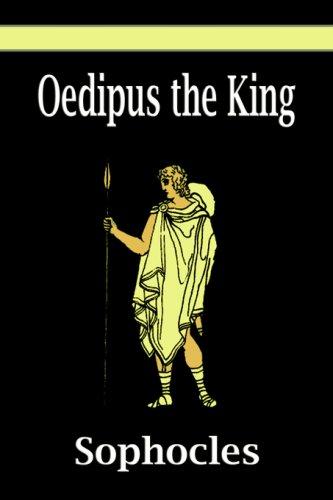
Sophocles · 429 BCE
A king vows to hunt down whoever is responsible for the plague on his city, chasing the investigation with a relentlessness that will not let him stop even as the clues start pointing somewhere he never expected. Aristotle's model tragedy and drama's most perfect plot: every step toward the truth taken freely, every step foreordained.
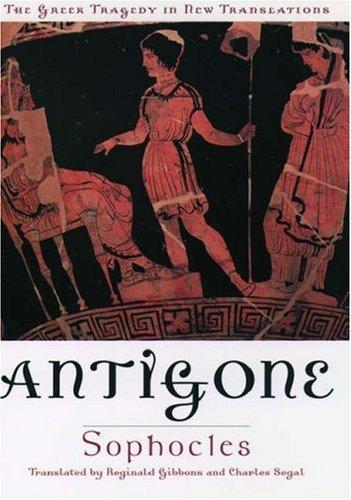
Sophocles · 441 BCE
A young woman buries her traitor brother against the king's decree, choosing divine law over state law and death over obedience. The original drama of conscience versus power, still the reference point for every argument about civil disobedience.

Euripides · 431 BCE
Abandoned by the husband she sacrificed everything for, a foreign sorceress takes a revenge that includes her own children. Ancient drama's most unflinching study of rage, and of what a society that discards its women should expect in return.
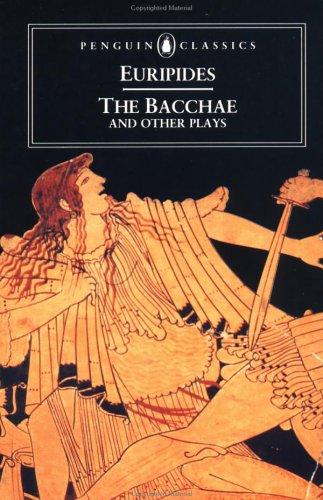
Euripides · 405 BCE
A king tries to suppress the ecstatic cult of Dionysus and is torn apart by its frenzied worshippers, led by his own mother. Euripides' terrifying last play: what happens when reason denies the irrational, staged as the god's own revenge.
Aristophanes · 411 BCE
The women of Athens and Sparta end a twenty-year war by refusing their husbands sex until peace is signed. Staged while that war was still killing Athenians, it remains comedy's boldest proof that laughter can be a political act.