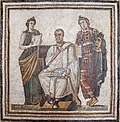
The Classical Epic
Gilgamesh, Homer, and Virgil found narrative itself on the scale of gods and armies.
Long before writing was common, epic lived in the mouth and the memory. Bards composed and recomposed Gilgamesh and the Iliad in performance, leaning on formula and the epic simile (a battle's chaos stopped cold and set beside a simile of lions or harvest) to hold thousands of lines in a singer's head and an audience's ear. The hero's journey, the katabasis into the underworld, the roll call of ships: these are memory devices before they are literary devices.
Virgil then did something new: he sat down and wrote an epic on purpose, translating Homer's oral inheritance into a literate empire's founding myth. The Aeneid and Ovid's Metamorphoses show the form turning self-conscious, quoting and answering its own tradition. Everything the Western epic later claims as inheritance (invocation, in medias res, the catalogue, the extended simile) is patented in these five poems.
How to spot it on the page
- Invocation of a muse or god before the story proper begins
- The epic simile: action frozen mid-scene and compared at length to something from ordinary life
- Stock epithets and repeated formulas built for oral memory and performance
- A hero's descent into the underworld to confront the dead
- Catalogues (of ships, of warriors, of transformations) cataloguing a whole world at once
- Narrative beginning in medias res, with the earlier story told later in flashback
What it left behind
Oral composition died out as literacy spread, but the epic's machinery never did: Virgil's deliberate, literate remaking of Homer set the template every later national epic would follow. The invocation, the catalogue, the underworld journey, and the epic simile all survive intact in Dante, Milton, and every war narrative since that still reaches for scale beyond the merely personal.
Defining works
For a guided order with notes, follow the reading path →
Sîn-lēqi-unninni · 1200 BCE
A tyrant king finds his equal in the wild man Enkidu, and friendship remakes him into someone willing to chase immortality itself. The oldest surviving long narrative in world literature: grief and mortality already fully formed four thousand years ago.
Homer · 750 BCE
A few weeks of rage near the end of the Trojan War (Achilles sulking, fighting, and finally grieving) become Western literature's founding poem. War's glory and its obscene waste held in a single unblinking gaze, three millennia old and still unsurpassed.
Homer · 725 BCE
A soldier takes ten years to get home, through cyclopes, sorceresses, and the dead, while his wife holds off a houseful of suitors. The template for every journey narrative since, and, in its cunning, storytelling hero, the first great portrait of intelligence.
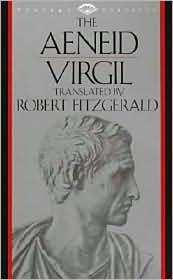
Virgil · 19 BCE
A Trojan survivor sails west through storm, love, and war to found the line that becomes Rome. Homer's epic machinery retooled into a national myth of duty, with an undertow of grief for everything empire costs, including its hero's happiness.
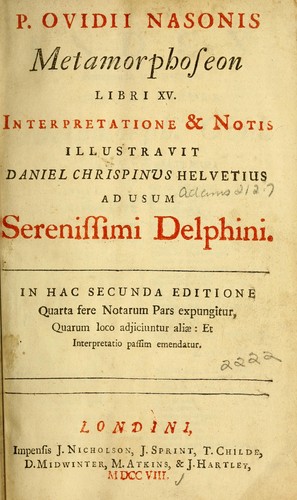
Ovid · 8 CE
Hundreds of myths (Daphne into laurel, Narcissus into flower, Arachne into spider) spliced into one continuous poem of transformation from creation to Ovid's own Rome. The single richest source of classical myth, mined by Chaucer, Shakespeare, and every painter since.