

Euripides
Greece
Psychologically raw and argumentative: characters who reason their way into monstrous acts, rhetoric turned into a weapon against the audience's comfort.
Euripides came a generation after Aeschylus and competed against Sophocles for decades, yet won far fewer prizes in his lifetime despite writing some of Greek tragedy's most enduring plays; ancient critics called him the most tragic of the tragedians precisely because he refused easy consolation.
He gave unusual weight and interiority to women and outsiders: Medea, the foreign sorceress abandoned by Jason, murders her own children in a finale so shocking it reportedly cost the play its competition in 431 BCE, and treated the Olympian gods with open skepticism, as capricious or absent rather than just.
He left Athens late in life for the Macedonian court, where he died around 406 BCE; his reputation, modest in his lifetime, grew steadily after, and of some ninety plays, nineteen survive: more than either of his rivals.
Lines of influence
Their books in the atlas
- 431 BCE
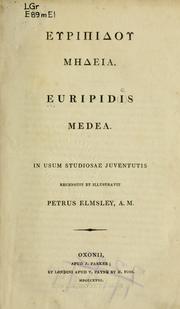 MedeaLvl 4tragedy
 - 405 BCE
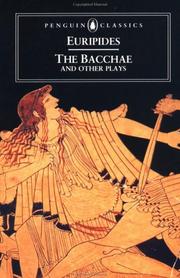 The BacchaeLvl 6tragedy
If you like Euripides, try
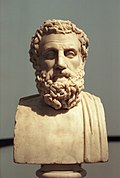 525–456 BCEAeschylusGreeceshaped Euripides · shared movement: Greek Drama · kindred genres: drama, tragedy
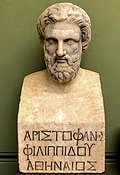 446–386 BCEAristophanesGreeceshaped by Euripides · shared movement: Greek Drama · kindred genres: drama
 496–406 BCESophoclesGreeceshared movement: Greek Drama · kindred genres: drama, tragedy · both write in Ancient Greek
 750–700 BCEHomerAncient Greecekindred genres: tragedy · both write in Ancient Greek · neighboring movements
 1564–1593Christopher MarloweEnglandkindred genres: drama, tragedy
 1564–1616William ShakespeareEnglandkindred genres: drama, tragedy