

Herman Melville
USA
Prose that swells and digresses without warning: encyclopedic catalogues of whale anatomy giving way, mid-sentence, to cosmic rhetoric and biblical thunder.
Before he was a novelist, Melville was a runaway: a failed bank clerk who signed onto a whaling ship out of New Bedford in 1841, jumped it in the Marquesas Islands, and lived for weeks among islanders reputed to be cannibals. Typee, his first book, turned that escapade into a bestseller and made him, briefly, a literary celebrity.
Neighbors in the Berkshires, he and Nathaniel Hawthorne traded long walks and letters; Melville dedicated Moby-Dick to him in gratitude for a friendship that curdled almost as fast as his career did. Pierre, the novel that followed, was savaged so badly it nearly ended his fiction writing; Bartleby, the Scrivener, the Wall Street clerk who 'would prefer not to,' is the era's quiet epitaph.
He spent nineteen years afterward as a customs inspector on the New York docks, writing poetry nobody read. Billy Budd was found unfinished in a tin breadbox after his death and not published until 1924, the same decade that rediscovered Moby-Dick and made him, too late, essential.
Lines of influence
No ancestors recorded: a headwater.
Their books in the atlas
- 1851
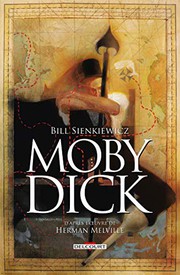 Moby-DickLvl 8epic
 - 1853
 Bartleby, the ScrivenerLvl 5psychological novel
Meanwhile, elsewhere
 1819–1898Theodor FontaneGermanyWestern Europe · Germany
 1812–1891Ivan GoncharovRussiaRussia & Eastern Europe · Russia
 1819–1890Gottfried KellerSwitzerlandWestern Europe · Switzerland
 1820–1887MultatuliNetherlandsWestern Europe · Netherlands
 1802–1885Victor HugoFranceWestern Europe · France
 1824–1889Wilkie CollinsEnglandWestern Europe · England
If you like Melville, try
 1913–1960Albert CamusAlgeria / Franceshaped by Melville · kindred genres: existentialist, psychological novel
 1897–1962William FaulknerUSAshaped by Melville · both shaped McCarthy
 1804–1864Nathaniel HawthorneUnited Statesshared movement: The American Renaissance · kindred genres: psychological novel · same region & era
 1933–2023Cormac McCarthyUSAshaped by Melville
 1809–1849Edgar Allan PoeUnited Statesshared movement: The American Renaissance · same region & era
 1811–1896Harriet Beecher StoweUnited Statesshared movement: The American Renaissance · same region & era