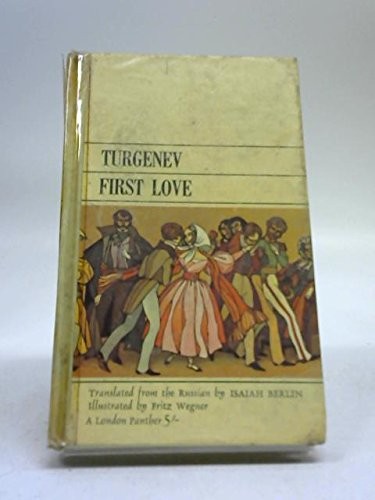
First Love
Ivan Turgenev · 1818–1883 · Russia
Originally Pervaya Lyubov (Russian)
Why it matters
A boy of sixteen falls for the older girl next door, then discovers who his rival is. Turgenev's most perfect novella distills the ache and humiliation of first passion into a few unforgettable pages.
At a glance
A short, lucid coming-of-age novella with a single clear retrospective narrator.
Deep dive
A sixteen-year-old spends one Moscow summer worshipping the older girl next door, certain she has a secret admirer he just hasn't identified yet.
Written for readers who have finished the book. No plot recap, and nothing here is safe to read first.
Themes & symbolism
Vladimir, narrating the events of one distant summer from well into adulthood, falls for Zinaida Zasekina, an impoverished young princess living next door who keeps a rotating circle of grown suitors amused and half-humiliated for her own entertainment, and Turgenev lets the boy's infatuation play out with real comic precision: the small ecstasies of being noticed, the constant jealousy of rivals, the total inability to read what any of it actually means. Vladimir spends the whole summer positioned as the youngest, least threatening member of Zinaida's circle, granted an intimacy the older men are denied precisely because nobody, himself included, takes his feelings seriously yet.
The novella turns once Vladimir becomes convinced Zinaida has a secret lover she's hiding from the rest of her admirers, and spends its final act as a small, devastating detective story with a solution the reader is likely to see coming well before the boy does. Turgenev is far more interested in what the discovery does to Vladimir's understanding of the adults around him than in the romantic plot itself: an idolized, remote father revealed as capable of a hidden passion recasts everything the boy thought he knew about who deserves worship and who deserves pity, well before the summer, or the story, is finished with him.
A Riding Crop and a Kiss
Spying on his father's secret assignations with Zinaida, Vladimir witnesses a single, wordless gesture that reorganizes the whole novella around it: his father strikes Zinaida's bare arm with a riding crop in a flash of controlled violence, and rather than recoiling, she presses her lips to the raised welt it leaves. Turgenev offers no commentary on the moment at all, simply lets the boy, and the reader, absorb an image of desire that has nothing to do with the tender, decorous courtship the rest of the book's suitors have been performing for Zinaida in public.
The last seal: what actually happens, and why it lands the way it does.
The ending, explained
Vladimir's father dies suddenly of a stroke not long after, leaving behind a letter warning his son to fear a woman's love, the closest the story comes to the older man explaining himself, though even the warning arrives after it can do the boy any good. Years later, Vladimir learns secondhand that Zinaida married and then died in childbirth, a piece of news the adult narrator delivers with a flatness that reads as its own kind of grief. He closes the novella not on Zinaida or his father at all but on an unrelated memory of visiting a dying old woman, using her nearness to death to reframe the entire summer as Turgenev's real subject in disguise: youth's conviction that passion is the most serious thing in the world, arriving right alongside a much older, quieter awareness of how little time anyone actually has to spend on it.