
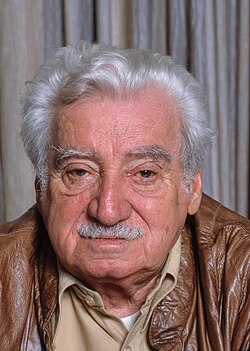
Jorge Amado
Brazil
Sensuous, garrulous, carnival-hued prose that turns market stalls and love affairs into one continuous, affectionate comedy.
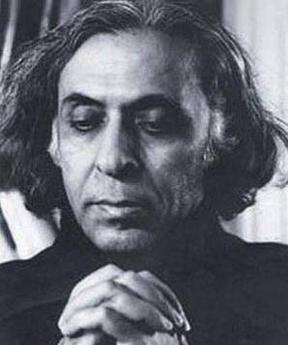
Amado grew up on his family's cacao plantation near Ilhéus, Bahia, the same boomtown world of planters, dockworkers, and street life that fills Gabriela, Clove and Cinnamon and much of his later fiction. He joined Brazil's Communist Party as a young man and was later elected a federal deputy under it.
His politics brought repeated exile: his books were burned under the Vargas dictatorship, and he spent years abroad in France and Czechoslovakia after the party was banned, breaking formally with Communism only after the Soviet invasion of Hungary in 1956. He returned to Bahia to write with less overt politics and far greater popular warmth.
Dona Flor and Her Two Husbands followed, and he became Brazil's most internationally translated novelist, elected to the Brazilian Academy of Letters and honored across Latin America before his death in Salvador in 2001.
Their books in the atlas
- 1958
 Gabriela, Clove and CinnamonLvl 3romance
 - 1966
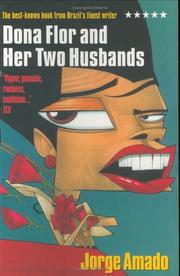 Dona Flor and Her Two HusbandsLvl 4romance
Meanwhile, elsewhere



If you like Amado, try
 1910–2003Rachel de QueirozBrazilshared movement: The Brazilian Modern Novel · kindred genres: family saga · both write in Portuguese
 1908–1967João Guimarães RosaBrazilshared movement: The Brazilian Modern Novel · kindred genres: magical realism · both write in Portuguese
 1892–1953Graciliano RamosBrazilshared movement: The Brazilian Modern Novel · kindred genres: family saga · both write in Portuguese
 1920–1977Clarice LispectorBrazilshared movement: The Brazilian Modern Novel · both write in Portuguese · same region & era
 1884–1969Rómulo GallegosVenezuelakindred genres: romance · neighboring movements · same region & era
 b. 1942Isabel AllendeChilekindred genres: family saga, magical realism · same region & era