

Graciliano Ramos
Brazil
Austere, pared-down sentences with almost no adjectives: prose stripped as bare as the drought it describes, feeling conveyed by withholding.
Ramos ran a dry-goods store and worked as a small-town journalist in Alagoas before politics pulled him further in; elected mayor of Palmeira dos Índios, he filed a famously laconic annual budget report that got him noticed by state officials and led to a post directing the state's education system.
In 1936, under Getúlio Vargas's dictatorship, he was arrested without charge or trial on suspicion of Communist sympathies and held for roughly ten months, part of it aboard a prison ship; he later turned the ordeal into Prison Memoirs, published after his death. He wrote Barren Lives, his best-known novel, largely in the years around that imprisonment.
He joined the Brazilian Communist Party after his release and continued writing and working as a public servant in Rio de Janeiro until his death in 1953.
Their books in the atlas
- 1934
 São BernardoLvl 6psychological novel
 - 1938
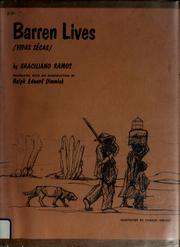 Barren LivesLvl 6psychological novel
Meanwhile, elsewhere
 1875–1955Thomas MannGermanyWestern Europe · Germany
 1873–1954ColetteFranceWestern Europe · France
 1879–1970E. M. ForsterEnglandWestern Europe · England
 1890–1979Jean RhysUnited Kingdom / DominicaWestern Europe · United Kingdom / Dominica
 1877–1962Hermann HesseGermany / SwitzerlandWestern Europe · Germany / Switzerland
 1885–1970François MauriacFranceWestern Europe · France
If you like Ramos, try
 1910–2003Rachel de QueirozBrazilshared movement: The Brazilian Modern Novel · kindred genres: family saga, psychological novel · both write in Portuguese
 1920–1977Clarice LispectorBrazilshared movement: The Brazilian Modern Novel · kindred genres: psychological novel · both write in Portuguese
 1912–2001Jorge AmadoBrazilshared movement: The Brazilian Modern Novel · kindred genres: family saga · both write in Portuguese
 1908–1967João Guimarães RosaBrazilshared movement: The Brazilian Modern Novel · both write in Portuguese · same region & era
 1839–1908Machado de AssisBrazilkindred genres: psychological novel, tragedy · both write in Portuguese · same region & era1885–1970François MauriacFrancekindred genres: psychological novel, family saga