
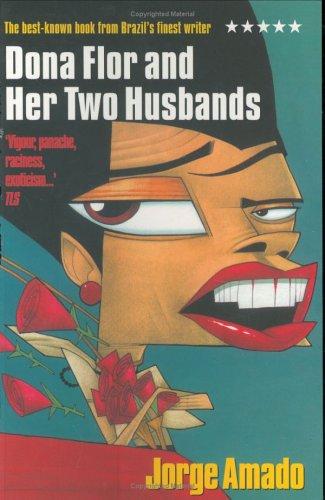
Dona Flor and Her Two Husbands
Jorge Amado · 1912–2001 · Brazil
Originally Dona Flor e Seus Dois Maridos (Portuguese) · translated by Harriet de Onís
Why it matters
A widow remarries a steady, respectable man, only for her scoundrel first husband's ghost to return and reclaim her bed. Amado's sensuous comedy of desire, propriety, and Bahian magic.
At a glance
A straightforward comic narrative enlivened by a ghost, with no structural difficulty.
Deep dive
What Dona Flor gets to keep once she's a respectable widow and a respectable wife in the same lifetime, and why Amado refuses to make her choose between the husband who's alive and the one who isn't.
Written for readers who have finished the book. No plot recap, and nothing here is safe to read first.
Themes & symbolism
Vadinho dies in the opening pages, collapsing mid-samba during Carnival, dressed as a woman, drunk, likely leaving another woman's bed only hours before, and Amado uses that death to launch rather than end his method: everything Dona Flor loved about him, his appetite, his recklessness, his total refusal of respectability, is also everything that ruined her financially and socially across their whole marriage. The novel's structure asks the reader to hold both truths at once rather than resolve them, exactly the way its heroine has to.
Teodoro Madureira, the punctual, devoted pharmacist Dona Flor marries after her mourning year ends, gives her everything Vadinho never could, a fixed income, fidelity, a husband who remembers anniversaries, and Amado is careful not to mock that stability even while showing exactly how little of Dona Flor's actual appetite it satisfies. Her friend Dionísia dos Flores, a Candomblé priestess, eventually performs the ritual that returns Vadinho, now visible only to Flor, exactly as impossible as he ever was in life. Amado narrates his reappearance with the same flat confidence he gives every other event in the book, no hesitation, no rationalizing frame, because the novel's real position is that a woman's desire doesn't require the world's permission to be real, only her own.
Exu at the Crossroads of the Plot
Dionísia's ritual specifically invokes Exu, the orixá of thresholds, communication, and mischief in Candomblé cosmology, whose domain is exactly the kind of boundary-crossing the novel stages: between the living and the dead, between a respectable second marriage and an irrepressible first one. Amado, a longtime Communist and a serious student of Bahian Afro-Brazilian religion, treats Candomblé throughout not as local color borrowed for texture but as a working cosmology with its own internal logic, one perfectly capable of explaining a resurrection that Catholic Salvador's official channels never could.
A City Written Through Its Appetites
Salvador's food stalls, gambling dens, and Carnival crowds get the same loving, specific attention Amado gives his characters' desires, and that's not incidental: Dona Flor teaches at a cooking school, and her culinary skill, like Gabriela's in Amado's other Bahian novel, becomes a form of authority that has nothing to do with the men who claim to provide for her. Where Gabriela refuses domestication outright, Dona Flor's compromise is subtler and stranger: she doesn't choose between her two husbands' worlds so much as insist, against every social rule available to her, that she's allowed to keep both.
The last seal: what actually happens, and why it lands the way it does.
The ending, explained
Unable to stop craving Vadinho even in her contentment with Teodoro, Dona Flor eventually accepts what she'd been resisting: she takes her first husband back as an invisible, insatiable lover while remaining, in full public view, Teodoro's devoted and faithful wife. Amado closes the novel with Flor walking through Salvador between both men at once, Teodoro solid and respectable on one arm, Vadinho grinning and naked on the other, visible to her and to the reader alone. It isn't punished, undone, or even kept especially secret from the reader's sympathy. Amado's last joke is architectural: a happy ending built out of exactly the arrangement propriety says can't exist, granted to Flor without asking her to feel guilty about wanting it.
Where to go next
 Jorge Amado · 1958Gabriela, Clove and CinnamonLvl 3Fast paced
 Rachel de Queiroz · 1930The FifteenLvl 3Medium pace
 João Guimarães Rosa · 1956The Devil to Pay in the BacklandsLvl 9Slow burn
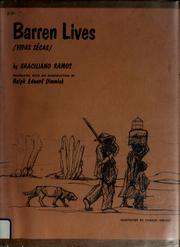 Graciliano Ramos · 1938Barren LivesLvl 6Slow burn
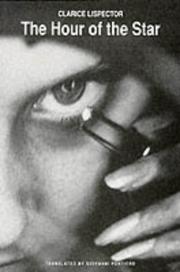 Clarice Lispector · 1977The Hour of the StarLvl 7Slow burn
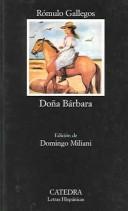 Rómulo Gallegos · 1929Doña BárbaraLvl 4Medium pace