
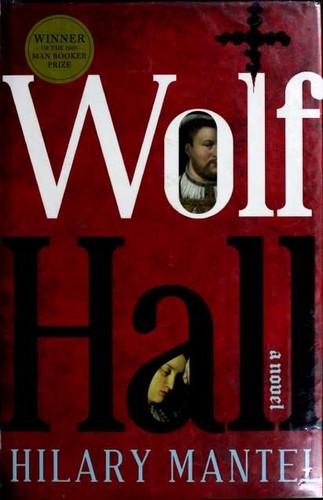
Wolf Hall
Hilary Mantel · 1952–2022 · England
Why it matters
Thomas Cromwell (blacksmith's son turned Henry VIII's indispensable fixer) narrated from inside his own restless mind in a vivid present tense. Mantel remade the historical novel and won the Booker.
At a glance
Present-tense narration with a pronoun-ambiguous 'he' and a vast Tudor cast to track.
Deep dive
How Hilary Mantel turned Tudor England's most reviled fixer into fiction's most persuasive interior mind — and why Thomas More doesn't come off nearly as well as legend has it.
Written for readers who have finished the book. No plot recap, and nothing here is safe to read first.
Themes & symbolism
Mantel's most radical choice is grammatical: the novel is narrated in a close third person that insists on calling Cromwell simply 'he,' even in crowded rooms where the pronoun could plausibly belong to anyone else present, forcing the reader into the same total, unblinking attention Cromwell pays to every conversation he's in. The effect isn't confusion for its own sake — it's identification so complete that the reader inhabits Cromwell's calculating, self-protective interiority without ever quite being let outside it, watching him watch everyone else's tells while revealing almost none of his own.
The novel is also a deliberate rebuttal to Robert Bolt's A Man for All Seasons, which canonized Thomas More as the conscience-bound saint and Cromwell as the unscrupulous operator who destroyed him. Mantel flips the moral ledger: her More is a smug intellectual who has heretics burned and boasts of it at dinner, humiliates his own devoted family, and dies less a martyr to conscience than to vanity, while her Cromwell — blacksmith's son, mercenary, lawyer, widower who still grieves a wife and daughters dead of the sweating sickness in a single terrible season — earns his ruthlessness by having watched every door in England slam on men without money or blood. Wolsey's fall, engineered by nobles who despised his low birth as much as his failures, becomes the private grief Cromwell metabolizes into political method: he never forgets who let his cardinal die friendless, and the novel's court intrigue is, underneath, a very long act of remembering.
Rewriting Thomas More
Bolt's More refuses to sign the Act of Succession out of pure conscience and dies serenely; Mantel's version is colder company, a man who relishes his own certainty and who, as Lord Chancellor, sent evangelicals to be burned at Smithfield with a clarity of conscience he never extends to his opponents. Cromwell's dealings with him in the Tower are laced with genuine respect and genuine contempt in equal measure — the novel doesn't ask readers to swap one saint for another so much as to notice that 'conscience,' in either man's mouth, is also a tool.
Wolsey's Ghost
Cardinal Wolsey, stripped of office and left to die in disgraced exile, haunts Cromwell almost literally — he imagines conversations with him throughout the novel, reports the court's gossip to a dead man out of habit and love. Every calculation Cromwell makes about Anne Boleyn's faction, and about the men who orchestrated Wolsey's fall, carries the private charge of a debt he intends, eventually, to collect.
A Trilogy's Opening Move, Not a Resolution
Wolf Hall doesn't resolve Cromwell's story so much as complete its first movement: it closes in the weeks after Thomas More's execution, with Anne Boleyn newly triumphant but already showing the court the same brittleness that unmade Catherine of Aragon's faction, and with Henry's attention beginning to wander toward the quiet, unremarkable Seymour household. Cromwell, visiting Wolf Hall itself, clocks Jane Seymour's watchful stillness the way he clocks everything useful, filing it away without yet knowing what he'll do with it. Nothing here is a conclusion — Mantel wrote two more volumes to finish this story — but the closing pages plant the entire shape of Anne's destruction in a single unhurried domestic scene, ending the book on Cromwell already turning the page before the reader can.
Where to go next
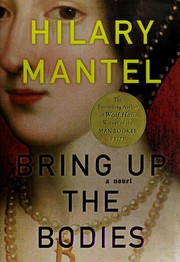 Hilary Mantel · 2012Bring Up the BodiesLvl 7Medium pace
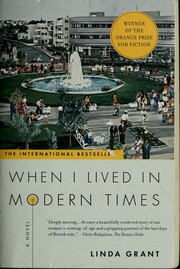 Linda Grant · 2000When I Lived in Modern TimesLvl 5Medium pace
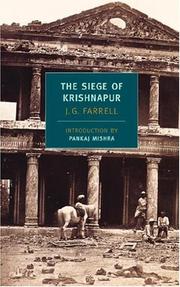 J. G. Farrell · 1973The Siege of KrishnapurLvl 5Medium pace
 Pat Barker · 1991RegenerationLvl 4Medium pace
 Penelope Lively · 1987Moon TigerLvl 6Medium pace
 Michael Ondaatje · 1992The English PatientLvl 7Slow burn