
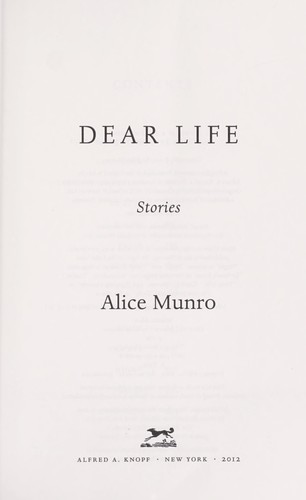
Dear Life
Alice Munro · 1931–2024 · Canada
Why it matters
Late stories of small-town Ontario women, each cracking a whole life open in a few pages. Munro's final collection: the short story's undisputed modern master, the year before her Nobel.
At a glance
Deceptively plain prose hides sudden tonal and temporal shifts.
Deep dive
Munro's declared last book closes with four pieces about her own Ontario childhood that she insists, in a headnote, are not quite stories.
Written for readers who have finished the book. No plot recap, and nothing here is safe to read first.
Themes & symbolism
Dear Life opens with ten stories in Munro's familiar register, small-town Ontario women whose lives pivot on a decision made or refused decades earlier, before ending with a section called Finale that Munro prefaces with a note insisting its four pieces, The Eye, Night, Voices, and Dear Life, are not quite stories, the closest thing to memoir she published across a sixty-year career built almost entirely on fiction that only sounded autobiographical.
The Eye recounts the death of Sadie, a hired girl on the Munro family farm whom young Alice idolized more than she idolized her own mother, a loss the child processes with a detachment the adult narrator can still only half explain. Night confesses to an episode of insomnia and a fleeting, unexplained impulse to harm her infant sister, an admission Munro withheld from her fiction for decades and allows herself only now, in her eighties, in a book she frames as her last.
The title piece closes on Munro's mother, a woman losing her grip first to Parkinson's disease and then to the family's shrinking finances in the house at the edge of Wingham, and it ends with Munro's unresolved guilt over not returning home before her mother's death, a debt the finale as a whole refuses to discharge on the reader's behalf. Reading the four pieces after ten stories built from invented lives makes the whole architecture of the book legible, a career spent disguising autobiography as fiction, ending with an admission of exactly how thin that disguise had been.
Why Munro Called Four True Pieces Not Quite Stories
The hedge in that phrase matters: Munro is not claiming these four pieces as strict reportage, only marking the shift from a fictional frame she'd trusted for decades to something closer to testimony, and the qualification asks readers to hold both possibilities open at once rather than settle the question for her.
Sadie's Funeral and a Child's Borrowed Grief
Alice's fascination with the ceremony around Sadie's death, the coffin, the neighbors' visits, outpaces anything resembling straightforward mourning, and Munro lets that gap stand uncorrected, a child absorbing the shape of grief before she has any personal stake in the loss that produced it.
Where to go next
 Alice Munro · 1971Lives of Girls and WomenLvl 5Medium pace
 Alice Munro · 1978Who Do You Think You Are?Lvl 5Medium pace
 Alice Munro · 2001Hateship, Friendship, Courtship, Loveship, MarriageLvl 5Medium pace
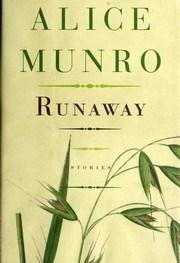 Alice Munro · 2004RunawayLvl 5Medium pace
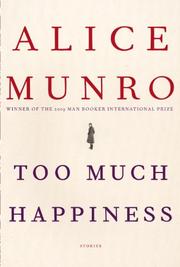 Alice Munro · 2009Too Much HappinessLvl 6Medium pace
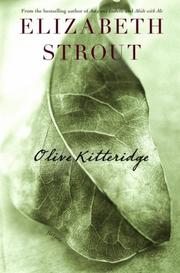 Elizabeth Strout · 2008Olive KitteridgeLvl 4Medium pace