
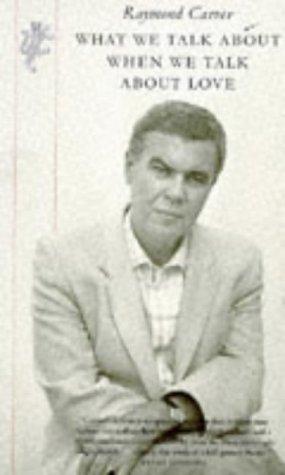
What We Talk About When We Talk About Love
Raymond Carver · 1938–1988 · United States
Why it matters
Four people drinking gin discuss what love actually means, circling the question without ever quite landing on an answer. The collection that made Carver's spare, stripped style the era's defining American voice.
At a glance
Carver's spare minimalism, even more compressed than Cathedral.
Deep dive
How Gordon Lish's editing pencil turned Raymond Carver's stories about drinking, marriage, and near-misses into the leanest prose American fiction had seen in a generation.
Written for readers who have finished the book. No plot recap, and nothing here is safe to read first.
Themes & symbolism
The title story sets two couples drinking gin in a kitchen, arguing about what love actually means by way of an old couple recovering from a near-fatal car crash, and never arrives at a definition, the glasses just keep getting refilled as the light goes out the window. That refusal to resolve is the collection's method: Mel, Terri, Nick, and Laura talk past each other in short, flat sentences that report action without commenting on it, so that a reader has to supply everything the story withholds.
Editor Gordon Lish's cuts, sometimes half a story, are the reason this collection reads the way it does: "The Bath," about a boy struck by a car on his birthday, ends here on a ringing phone and a mother's dread, stripped of the reconciliation Carver had actually written into his own draft. "So Much Water So Close to Home" compresses a wife's horror at her husband's fishing trip, he and his friends find a dead woman in the river and keep fishing rather than report it right away, into clipped, almost toneless paragraphs that let the horror sit entirely in what isn't said.
"Popular Mechanics" runs the same minimalism to its hardest edge: a couple splitting up pull a baby between them in the kitchen, and the story ends on the tug itself, refusing to describe what has actually happened to the child. Carver's people are drinkers, the newly divorced, the recently fired, catastrophe always just offstage, and Lish's cuts keep the reader from ever being told how to feel about any of it.
Gordon Lish's Blue Pencil
Carver's original, uncut manuscript for this collection, later published as Beginners, runs roughly half again as long and gives its characters explanations, backstory, and softer landings that Lish removed wholesale. The published book is genuinely a collaboration built on that subtraction: Carver's plain sentences are his own, but the silence around them, the sense that a whole interior life has been amputated from the page, is largely Lish's contribution, and Carver spent years afterward uneasy about how much of the credit belonged to someone else's editing.
Drinking as the Collection's Real Plot
Alcohol runs under nearly every story here as the actual engine of the action, not background color: Mel's gin philosophizing, the unraveling marriages, the sudden violence that surfaces once characters have had enough to stop performing politeness. Carver, sober by the time the book appeared, wrote these people from the inside of an addiction he had only recently left, which is part of why the prose refuses to moralize about any of it.
Where to go next
 Raymond Carver · 1983CathedralLvl 4Medium pace
 Alice Munro · 2012Dear LifeLvl 5Medium pace
 Mavis Gallant · 2002Paris StoriesLvl 5Medium pace
 Sherwood Anderson · 1919Winesburg, OhioLvl 3Medium pace
 Anton Chekhov · 1899Selected StoriesLvl 4Medium pace
 John Cheever · 1978The Stories of John CheeverLvl 4Medium pace