
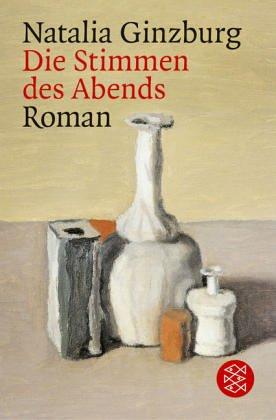
Voices in the Evening
Natalia Ginzburg · 1916–1991 · Italy
Originally Le voci della sera (Italian)
Why it matters
A small Italian town's postwar gossip, marriages, and buried fascist-era compromises are pieced together entirely through overheard dialogue. Ginzburg's spare, voice-driven method at its most concentrated.
At a glance
Told almost entirely in unattributed overheard dialogue, requiring careful voice-tracking.
Deep dive
How a small Piedmontese town's entire postwar history gets told without a single line of narration explaining who's speaking.
Written for readers who have finished the book. No plot recap, and nothing here is safe to read first.
Themes & symbolism
Ginzburg tells almost the entire novel through unattributed, overheard dialogue, conversations reported without tags or context, so that the reader has to assemble who is speaking, to whom, and when, from tone and repetition alone. The method mimics exactly how gossip actually moves through a small town: fragments passed along secondhand, thirdhand, already stripped of the circumstances that first produced them, until Elsa, the narrator, is less telling a story than transcribing the town's own way of talking about itself.
Underneath the marriages, courtships, and cotton-mill politics the dialogue circulates is the town's quieter subject, its unexamined accommodations with fascism, mentioned only glancingly, a name here, a rumor about wartime conduct there, never confronted directly by anyone in the conversations Ginzburg records. That silence is not an absence but the book's real argument: a community can talk endlessly about everything except the one thing that actually shaped it, and the gossip's volume is itself a way of not discussing the war.
Tommasino's Refusal
Elsa's engagement to Tommasino De Francisci, son of the family who owns the town's cotton mill, dissolves not through betrayal or scandal but through his flat, almost apologetic refusal to actually marry her, a withdrawal Ginzburg lets happen entirely offstage and reports only after the fact, in the same overheard register as everything else. The engagement's quiet failure mirrors the town's larger pattern of unexamined retreat: nothing here ends in open confrontation, everything simply stops, and the dialogue keeps circulating around the empty space where a decision should have been made out loud.
Elsa's Mother, the One Voice Who Breaks Pattern
Elsa's mother is the rare speaker in the novel granted anything like a continuous, characterized voice rather than a fragment absorbed into the town's chorus, complaining at length about her children's marriages and the family's declining fortunes with a specificity nobody else in the book is allowed. Ginzburg uses her insistence on being heard, at exhausting length, as the exception that proves the method's rule: the town's other silences are chosen, but hers is simply what happens when someone refuses to stop talking long enough to blend into the background everyone else quietly disappears into.
The last seal: what actually happens, and why it lands the way it does.
The ending, explained
The novel closes without any of its overheard conversations ever resolving into a full account of what happened to the De Francisci family or the town during the war years, Ginzburg withholds the very explanation her method has spent the whole book training the reader to expect. Elsa's broken engagement to Tommasino settles into one more piece of town gossip, retold and flattened like everything else, no angrier or sadder in the telling than a dispute over mill wages. The effect is less an ending than a demonstration: postwar Italy, in Ginzburg's Piedmont, absorbed its griefs the same way it absorbed everything else, by talking around them until they became just more voices in the evening.
Where to go next
 Natalia Ginzburg · 1963Family LexiconLvl 4Medium pace
 Annie Ernaux · 2008The YearsLvl 6Slow burn
 Marcel Proust · 1913Swann's WayLvl 8Slow burn
 Karl Ove Knausgaard · 2009My StruggleLvl 5Slow burn
 Elena Ferrante · 2011My Brilliant FriendLvl 3Fast paced
 Giuseppe Tomasi di Lampedusa · 1958The LeopardLvl 6Slow burn