
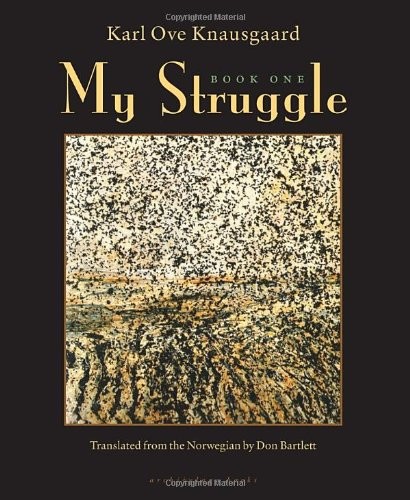
My Struggle
Karl Ove Knausgaard · b. 1968 · Norway
Originally Min kamp (Norwegian) · translated by Don Bartlett
Why it matters
Six volumes of one ordinary life (childhood, a father's death, marriage, small daily humiliations) recorded at obsessive, hypnotic length. Knausgaard's gamble that total attention could make the unremarkable unputdownable.
At a glance
Plain, exhaustive prose sustained across thousands of pages of minute daily detail.
Deep dive
The title is a dare, not a description — what six volumes of undiscriminating attention are built to prove, and what it costs everyone standing next to the man doing the attending.
Written for readers who have finished the book. No plot recap, and nothing here is safe to read first.
Themes & symbolism
My Struggle's real subject is a bet about attention itself: that removing the conventional memoir's filter — the assumption that only significant events deserve full narration — can generate a more total intimacy than curated significance ever could. A cup of coffee, a child's birthday party, and a father's death get comparably sustained focus across the six volumes, and the effect isn't leveling so much as destabilizing: the reader stops trusting that importance is something events simply have, and starts suspecting it's something selection manufactures. Knausgaard's gamble is that sustained, unselective looking is itself a form of intimacy no amount of careful curation can fake.
That gamble carries an ethical cost the books never fully resolve, and don't pretend to. Linda, his children, his extended family, and former friends appear largely under their own names or thinly veiled, and the Norwegian controversy over the project was never just literary — it was about consent, about what it means to achieve total honesty toward your own experience by way of a partial violation of everyone standing next to you in it. Knausgaard doesn't argue his way out of this tension; he keeps writing through it, and later volumes fold the real-world fallout of earlier volumes' publication back into the material, so the ethical problem becomes recursive content rather than an unaddressed flaw. It's a project that can only be written once — the second the method becomes self-aware of its own consequences, continuing to use it is a choice made with open eyes rather than an oversight the author can later disown.
The Father
Volume 1's account of Knausgaard and his brother cleaning out their father's squalid, alcohol-ruined house after his death functions as the whole project's ur-scene. The fear and awe the father commands even in absence — even in death — sets the emotional register that all six volumes keep circling back to: a son trying to out-attend a man who never gave him enough attention to feel secure. The obsessive, total documentation that follows across five more volumes reads, retrospectively, as an inversion of that neglect — if he cannot get his father's full notice, he will give his own life the fullest notice a writer has ever given anything.
Hitler and the We
The title's provocation — Min Kamp, deliberately echoing Mein Kampf — gets its fullest argument in Volume 6's long digressive essay on Hitler, which isn't shock tactic but genuine inquiry into the tension between individual selfhood and the collective "we" that both fascism and ordinary social belonging demand. Knausgaard reads the young Hitler as a case study in a self that couldn't individuate, then holds his own six-volume insistence on the granular specificity of one unremarkable life up against that failure, arguing, without quite stating it outright, that radical individual attention is itself a bulwark against the kind of self-erasure collective ideologies reward.
The last seal: what actually happens, and why it lands the way it does.
The ending, explained
Volume 6 closes with Knausgaard explicitly declaring an intent to stop writing about his own life in this exposing way — to stop being a writer who requires total disclosure and reclaim a private, unwritten existence for himself and the people around him. It's a renunciation of the very method that made the six volumes possible, which is what gives the ending its charge: the struggle named in the title ends not with resolution but with the deliberate choice of silence over further total attention, the one move the entire preceding project had never once made.
Where to go next
 Karl Ove Knausgaard · 2004A Time for EverythingLvl 7Slow burn
 Annie Ernaux · 2008The YearsLvl 6Slow burn
 Emmanuel Carrère · 2000The AdversaryLvl 5Fast paced
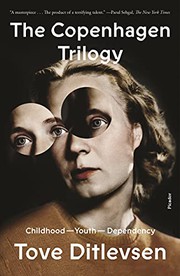 Tove Ditlevsen · 1971The Copenhagen TrilogyLvl 4Medium pace
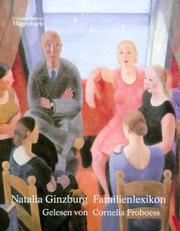 Natalia Ginzburg · 1963Family LexiconLvl 4Medium pace
 Rachel Cusk · 2014OutlineLvl 6Slow burn