
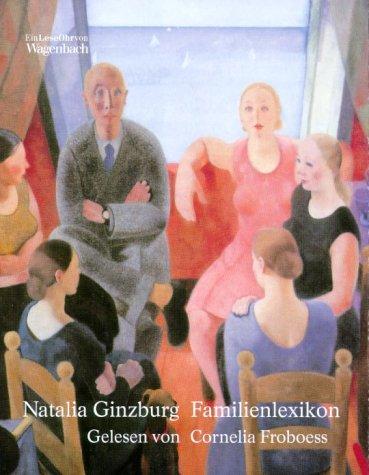
Family Lexicon
Natalia Ginzburg · 1916–1991 · Italy
Originally Lessico famigliare (Italian)
Why it matters
A family reassembled entirely from the catchphrases they repeated at the dinner table, against the backdrop of Fascism and loss. Ginzburg turns private idiom into the truest form of memory.
At a glance
Fragmented, repetitive family idiom substitutes for conventional plot momentum.
Deep dive
A family's private vocabulary of nicknames and catchphrases is the sturdiest record Ginzburg can make of everything Italian fascism tried to break apart.
Written for readers who have finished the book. No plot recap, and nothing here is safe to read first.
Themes & symbolism
Ginzburg opens by warning readers that the book is a memoir with the names and facts changed nowhere, written entirely from memory and therefore certain to contain errors she isn't interested in correcting, a disclaimer that reframes everything that follows: the family lexicon of the title, her father Giuseppe's roared phrases like "Sempliciotto!" and "Not to be borne!", her mother Lidia's own set of habitual expressions, matters more to Ginzburg as the family's actual shared inheritance than any factual record could. Repeated often enough across generations, these phrases become a private language that identifies who belongs to the family and who doesn't, since an outsider can quote the words back perfectly and still not understand what they mean inside this specific household.
The Levi household's ordinary bickering runs directly alongside the rise of Italian fascism, Giuseppe's arrests for anti-fascist activity, and eventually her brothers' work in the Resistance, and Ginzburg's most distinctive choice is refusing to let the political history overwhelm the domestic register; a father's imprisonment gets roughly the same conversational weight as an argument about a coat, not because Ginzburg thinks it mattered less, but because that flattening is exactly how the family actually processed catastrophe in real time, folding it into the same running commentary they used for everything else. The book's most devastating sentence, reporting her first husband Leone's death in a Nazi prison in Rome, arrives with almost no elaboration at all, a silence that reads louder than any extended grief passage could have.
A Family Genre of Its Own
Family Lexicon won Italy's Strega Prize in 1963 as a novel, a classification Ginzburg herself never fully endorsed or rejected, and the book's real innovation is refusing the choice: every event happened, by Ginzburg's own account, yet she writes entirely without notes, footnotes, or verification, trusting the family's repeated phrases to carry a truth that a more researched, more careful memoir might actually distort by smoothing out whichever details memory happened to keep. That approach, prioritizing the emotional accuracy of how a family remembers itself over the documentary accuracy of what provably happened, has made the book a reference point for autofiction well beyond Italy, read now as much for its formal daring as for its portrait of a specific Turin family under fascism.
Where to go next
 Natalia Ginzburg · 1961Voices in the EveningLvl 5Slow burn
 Annie Ernaux · 2008The YearsLvl 6Slow burn
 Marcel Proust · 1913Swann's WayLvl 8Slow burn
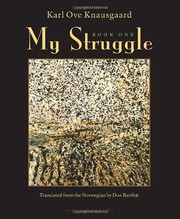 Karl Ove Knausgaard · 2009My StruggleLvl 5Slow burn
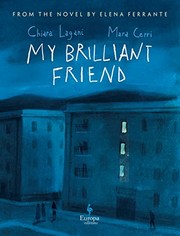 Elena Ferrante · 2011My Brilliant FriendLvl 3Fast paced
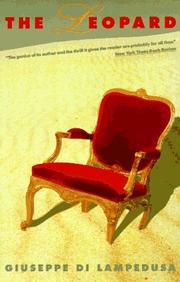 Giuseppe Tomasi di Lampedusa · 1958The LeopardLvl 6Slow burn