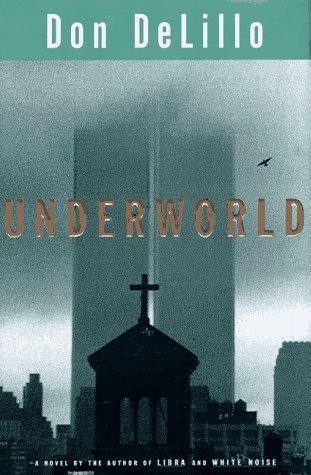
Underworld
Don DeLillo · b. 1936 · USA
Why it matters
From the 1951 pennant-race homer to desert nuclear tests, tracked backward through the Cold War's garbage and longing. DeLillo's cathedral, regularly voted the great American novel of its half-century.
At a glance
Reverse chronology and a vast interlocking cast demand serious sustained attention.
Deep dive
On the Bruegel painting hidden in the prologue's title, and the stand-up comedian DeLillo recruits as the Cold War's unlikeliest chorus.
Written for readers who have finished the book. No plot recap, and nothing here is safe to read first.
Themes & symbolism
Nick Shay's career in waste management is the novel's central metaphor made literal: he spends his days managing the physical refuse that a whole society generates without wanting to look at, and DeLillo builds an equivalence between that garbage and the Cold War's own unseen byproducts — buried nuclear waste, classified secrets, the discarded lives and violence sitting underneath decades of American abundance. Nick's own past works the same way; a specific act of violence from his youth is withheld and only gradually surfaced, so his personal history and the nation's official one are shown running on identical machinery, both requiring somewhere to put what can't be safely disposed of. The novel's title names this directly: an underworld isn't a metaphor for something separate from American life in the period, it's what all that abundance and all that secrecy have been quietly built on top of the entire time.
The novel largely runs backward, from the edge of the Cold War's end toward its earliest anxieties, so that each earlier section functions as an explanation the reader already has the consequences for — the present in Underworld is explicitly built from buried, unresolved pasts, not the other way around. Bobby Thomson's home run ball, changing hands across decades of collectors, hustlers, and traders, becomes DeLillo's vehicle for showing how private ownership quietly absorbs and reprocesses public history into personal possession. The prologue fuses the ball's afternoon, October 3, 1951, with the historical fact that the Soviet Union tested its second atomic bomb the same day — pure American joy and Cold War dread sharing one date on the calendar — and that collision is the whole book's thesis stated up front: every triumph in this period has dread as its exact, simultaneous twin, whether or not anyone at the ballpark could feel it.
The Triumph of Death
The prologue borrows its title from Bruegel's painting of the same name, and functions as a complete work in miniature before the novel proper even starts sorting itself into decades: the Giants-Dodgers pennant game, Thomson's shot heard round the world, thousands of fans on their feet at the Polo Grounds, cut against the news, arriving in the stands in whispers, that the Soviets have detonated a second bomb. DeLillo holds both events in the same paragraph without commentary, letting the reader do the work of realizing that mass American euphoria and nuclear dread were never sequential in this period but simultaneous, occupying the same bodies in the same bleachers on the same afternoon.
Lenny Bruce as Chorus
DeLillo threads real historical material through the novel as a kind of recurring chorus, most vividly Lenny Bruce's stand-up sets riffing on the Cuban Missile Crisis in real time, treating imminent nuclear annihilation as material for a joke that keeps refusing to land as pure comedy. Bruce's routines work like the novel's own method in condensed form — mass dread processed into performance, history absorbed into pop culture almost before it's finished happening — and his repeated, increasingly manic return to the threat of annihilation gives the book a live, unstable register that its more meditative sections about garbage and secrecy can't supply on their own.
The last seal: what actually happens, and why it lands the way it does.
The ending, explained
Because the novel's chapters run in reverse, its formal ending is really its earliest point — after tracing the Cold War's waste and secrecy backward through four decades, the epilogue moves past even the 1951 prologue into a coda that shifts register entirely, reaching for something almost devotional. DeLillo turns to the emerging space of the early internet, an invisible web quietly connecting isolated individuals, and lets the prose reach for a redemptive, spiritual charge it has withheld everywhere else in the book. It isn't a resolution of plot so much as a wager: that whatever comes after the Cold War's buried refuse might offer real connection rather than another form of waste, though DeLillo leaves the wager open rather than confirmed, closing on hope pitched exactly high enough to sound uncertain of itself.