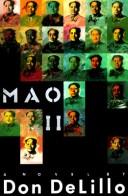
Mao II
Don DeLillo · b. 1936 · USA
Why it matters
A reclusive novelist, modeled loosely on Salinger and Pynchon both, watches a terrorist's hostage-taking claim the cultural authority once reserved for the novel. DeLillo's eerily prescient meditation on crowds, images, and mass spectacle as the new narrative art.
At a glance
Aphoristic, elliptical prose compresses big ideas into a short, demanding novel.
Deep dive
Why a reclusive novelist who hasn't published in years decides the only way left to matter is to trade his own image for a kidnapped poet's freedom, and what DeLillo means by opening and closing the book with mass weddings and crowds instead of individuals.
Written for readers who have finished the book. No plot recap, and nothing here is safe to read first.
Themes & symbolism
Bill Gray has spent decades refusing to publish or be photographed, treating his own invisibility as the last form of authority a novelist has left in a culture that DeLillo shows, in the opening Yankee Stadium mass wedding of Moonies, has moved its real narrative power to crowds, cults, and terrorist spectacle instead. Karen, a survivor of that mass wedding who now lives with Bill and his assistant Scott, embodies the same crisis from the other side, a woman who found meaning inside a movement built entirely on submerging the self into an image, and DeLillo lets her and Bill sit across the novel from each other as two failed responses to the same collapse of individual meaning.
When Bill finally agrees to let photographer Brita Nilsson take his picture, breaking decades of self-imposed invisibility, and then travels toward Beirut to try to trade his own diminished fame for a hostage poet's release, DeLillo is staging the novel's central argument literally: a novelist offering his last asset, his face, his authorial mystique, in direct competition with a terrorist cell that already understands, better than any writer, how to command a room full of cameras. The exchange DeLillo keeps circling is blunt, the writer's old cultural territory has been annexed by people willing to take hostages, and Bill's quixotic trip is an attempt to reclaim ground the novel is clear he's already lost.
Warhol's Mao as the Book's Real Subject
The title comes from Andy Warhol's series of mass-produced Mao Zedong silkscreens, portraits of a mass murderer flattened into repeatable pop imagery, and DeLillo uses the reference to argue that the twentieth century has learned to process even its worst tyrants and its most singular writers through the same machinery of mechanical reproduction. Crowds recur throughout the novel, at the stadium wedding, in Tiananmen Square footage, in a soccer riot, not as backdrop but as the actual protagonist competing with Bill for narrative primacy, individual consciousness losing ground, scene by scene, to the mass image.
The last seal: what actually happens, and why it lands the way it does.
The ending, explained
Bill is struck by a car in London on his way to a ferry, sustains internal injuries he conceals and refuses to treat, and keeps traveling toward Beirut anyway, driven by the same stubborn, self-erasing logic that has governed his whole reclusive career. He dies alone and unidentified on the ferry to Cyprus, his body briefly reduced to an anonymous corpse before anyone connects it to the famous, camera-shy novelist, the exact fate DeLillo has been building toward: even in death, Bill can't out-narrate the culture's indifference to an individual life it isn't actively watching. Karen, meanwhile, drifts toward Beirut herself in the novel's last pages, drawn less by Bill's mission than by the hostage crisis's televised spectacle, ending the book inside the same crowd logic it opened with rather than at any resolved center.