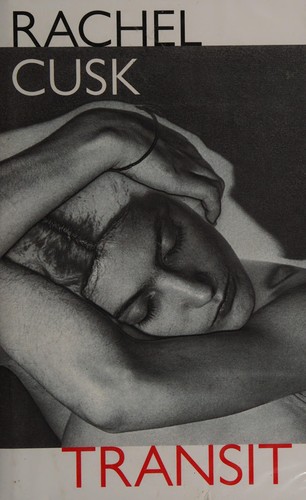
Transit
Rachel Cusk · b. 1967 · United Kingdom / Canada
Why it matters
A newly divorced writer renovates a London house while contractors, exes, and strangers pour their own stories into her near-total silence. The second installment of Cusk's Outline trilogy, refining its emptied-narrator method further.
At a glance
Sustained monologue-collecting structure with almost no conventional dramatic action.
Deep dive
The second book in Cusk's Outline trilogy puts a newly divorced writer back in London to renovate a flat and listen, and the renovations and the listening turn out to be doing the exact same kind of work.
Written for readers who have finished the book. No plot recap, and nothing here is safe to read first.
Themes & symbolism
Faye, recently divorced and back in London with her two sons, narrates almost nothing about her own interior life directly; instead the novel is built almost entirely out of other people's extended monologues, an astrologer's cold reading of her future, her cousin's account of a failing marriage, her former lover Gerard's account of his new one, a builder's account of fleeing Poland, delivered to her and reported by her with barely any interjection of her own reaction. Cusk's method, continued from Outline, makes Faye legible only through negative space, the specific things other people choose to tell a woman who asks almost nothing and reveals even less, so that a reader assembles her state of mind entirely from what she notices and what she omits.
The flat Faye buys, structurally unsound and requiring gutting before it's livable, gives the novel its clearest organizing image for what divorce has actually done to her: a life that has to be stripped down to structure before anything new can be built on it, with builders, Pavel especially, doing visible, literal work on the walls while Faye does the same work silently on herself. The downstairs neighbors, hostile from the moment renovation work begins and increasingly vicious as the book goes on, supply the novel's most direct antagonism, a resistance to change so entrenched it starts to read as something closer to a diagnosis of what keeps people, more generally, trapped in unlivable arrangements rather than rebuilding them.
A Trilogy That Refuses Its Middle a Climax
Transit sits deliberately without resolution between Outline and Kudos, and Cusk builds that structural incompleteness into the book itself: no relationship concludes, no professional ambition is realized or abandoned, and Faye's own arc across the novel amounts to accumulation rather than transformation, more monologues absorbed, no single epiphany produced. The effect asks readers to distrust the very idea of a middle book's job, that it should complicate an opening and set up a resolution, in favor of something closer to how an actual period of transition feels from inside it, directionless and only retrospectively meaningful.
The Astrologer's Cold Reading as Method
The astrologer who reads Faye's chart early in the novel offers predictions built entirely from generalities plausible enough to fit almost anyone's circumstances, and Cusk plants the scene as a quiet key to her own narrative technique: the monologues Faye collects throughout the book work by the same logic, specific enough to feel like genuine intimacy, general enough that Faye, and the reader, can read her own situation into nearly all of them. The novel's real subject turns out to be less the individual stories than this contagious, cold-reading effect, how listening closely enough to anyone's account of their life starts to feel like hearing your own.