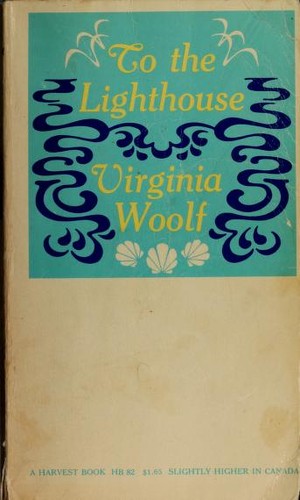
To the Lighthouse
Virginia Woolf · 1882–1941 · England
Why it matters
A family summer, a ten-year gap in which time itself narrates, a postponed sail. Woolf's elegy for her parents is modernism's most moving performance: 'Time Passes' remains the boldest twenty pages in the English novel.
At a glance
Fluid free indirect discourse across shifting consciousnesses and a famously compressed middle section.
Deep dive
How ten years, a world war, and a family's unraveling get compressed into a handful of bracketed asides — and why that compression is the boldest choice in the book, not a shortcut around grief.
Written for readers who have finished the book. No plot recap, and nothing here is safe to read first.
Themes & symbolism
Mrs. Ramsay is the novel's still point — the one who holds the household, the dinner party, and everyone's fragile egos together by sheer intuitive generosity, a form of creation Woolf sets deliberately alongside Lily Briscoe's painting as its equal and rival. Lily's inability to finish her portrait of Mrs. Ramsay across the first section is really an inability to find a form adequate to a person that vivid and that elusive; her eventual refusal of marriage, held up against Mrs. Ramsay's whole-hearted belief in matchmaking and domestic completion, stages the book's real argument about what a woman's life can be shaped around. The lighthouse itself resists single meaning by design — sometimes a longed-for, unreachable idea (for James, forbidden by his father), sometimes the plain, ordinary structure it turns out to be up close — because the novel's real subject is the gap between the thing anticipated and the thing arrived at, and how both turn out to matter.
The house left standing empty for a decade is the novel's boldest symbol: its slow decay under salt air and neglect, waiting for hands to reclaim it, becomes exactly co-extensive with the time that has been quietly destroying the Ramsay family off-page, so that setting and grief are rendered as the same material. Mr. Ramsay's need for constant reassurance, endlessly refilled and endlessly draining Mrs. Ramsay, is the marriage's engine and its cost both — Woolf portrays their union as a real, sustaining bond and an unequal, exhausting one at once, without resolving the tension into judgment either way.
'Time Passes'
The middle section is Woolf's most radical formal gamble: ten years, a world war, and three deaths — Mrs. Ramsay's, Andrew's in battle, Prue's in childbirth — are dispatched in brief bracketed asides inside paragraphs otherwise devoted to dust, encroaching weeds, and a housekeeper's efforts to keep the place from collapsing. It's a deliberate refusal of the drama fiction usually gives death, and the effect is more devastating for it: time and loss, the section argues, are impersonal and unceremonious in exactly the way the first section's richly peopled, minute-by-minute rendering of a single evening is not. Grief here isn't narrated; it's structurally enacted, felt as absence in the sentence itself.
The last seal: what actually happens, and why it lands the way it does.
The ending, explained
A decade on, Mr. Ramsay finally sails James and Cam to the lighthouse James was once denied — the trip functions as a wordless, partial reconciliation, James receiving, almost despite himself, a flicker of paternal approval he had stopped expecting. Onshore, at the exact moment the boat reaches the lighthouse, Lily Briscoe draws the decisive line through the center of her painting and finishes it, thinking "I have had my vision." Woolf yokes the two completions deliberately: the family's long-deferred errand and Lily's long-deferred artwork resolve together, both standing in for the way art and memory can give shape and closure to a loss — Mrs. Ramsay's death, the whole vanished world of the first section — that ordinary life simply leaves ragged.