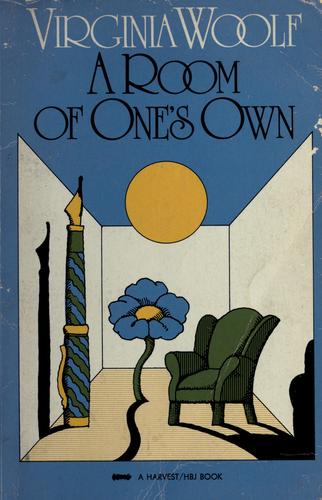
A Room of One's Own
Virginia Woolf · 1882–1941 · England
Why it matters
A woman needs money and a room of her own to write fiction, Woolf argues in this landmark essay expanding two Cambridge lectures. Equal parts literary history, memoir, and manifesto, it remains feminist criticism's founding text.
At a glance
A clear, discursive essayistic argument, though rich in allusion and irony.
Deep dive
A thought experiment about Shakespeare's equally gifted sister, and the material case Woolf builds for why her talent would never have survived contact with the world he was born into.
Written for readers who have finished the book. No plot recap, and nothing here is safe to read first.
Themes & symbolism
Woolf's invented Judith Shakespeare, as talented as her brother and given none of his opportunities, mocked for wanting to act, married off against her will while still a girl, ending pregnant, alone, and buried in an unmarked grave, is the essay's central argument made as counterfactual rather than assertion: genius denied a history isn't proof genius didn't exist, only proof that talent needs money, time, and permission before it can become a body of work anyone gets to read, let alone remember. Woolf insists this isn't ancient history either, tracing the same mechanisms, forbidden libraries, disapproving fathers, a woman's writing hour stolen by whoever else is in the house, into the lived experience of the writers she's addressing.
Woolf's case for an "incandescent" mind, one that burns free of personal grievance, sets Charlotte Brontë's visible anger in Jane Eyre against Jane Austen's untroubled serenity, arguing that rage, however justified by real circumstance, distorts the sentence it's written in and narrows what the writer is able to see beyond her own case. The essay performs its own contradiction of this claim throughout, its wit consistently sharpened by a fury it never quite lets itself name outright, so that the argument for calm is delivered in a voice that is anything but.
Prunes and Custard at Fernham
Woolf sets a lavish men's college dinner, sole in a cream sauce, partridges, wine poured freely, against the meager prunes and custard served at the women's college across the street, refusing to let the essay's argument stay abstract: five hundred pounds a year and a locked door are treated as literal preconditions for fiction, not comfortable extras, because a mind interrupted every hour by someone else's needs, or fed on custard instead of wine, has no room left to compose a sentence, let alone sustain a novel to its end.
Mary Carmichael's Unwritten Sentence
Woolf invents a fictional contemporary novelist, Mary Carmichael, to demonstrate a claim rarely made this directly: that women's fiction has been held back not only by lack of opportunity but by inherited sentence rhythms built for male experience, and that a line as simple as "Chloe liked Olivia", two women's friendship treated as a subject worth a sentence of its own rather than a rivalry over a man, required a whole new kind of prose before it could even be written down and printed.