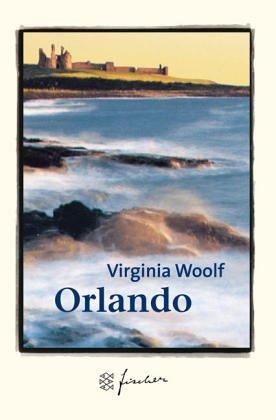
Orlando
Virginia Woolf · 1882–1941 · England
Why it matters
A poet lives four centuries and changes sex halfway: Woolf's love letter to Vita Sackville-West and her most playful book. Gender as costume, biography as joke: it grows more contemporary every year.
At a glance
Playful mock-biographical voice, though its shifting centuries and gender require tracking.
Deep dive
A nobleman lives across four centuries of English history without much noticing his own biological impossibility, and somewhere in the middle of a very long sleep he simply becomes a woman.
Written for readers who have finished the book. No plot recap, and nothing here is safe to read first.
Themes & symbolism
Woolf frames the novel as a mock-biography, complete with a fictional biographer straining to impose order on a subject who refuses to cooperate with the genre's demand for linear cause and consequence, and that parody is doing real argumentative work: traditional biography assumes a stable, continuous self moving through documented time, and Orlando, living from the reign of Elizabeth I into 1928 without aging past thirty-six, makes that assumption impossible to sustain. The biographer's periodic exasperation at Orlando's contradictions, at moments of total blankness in the record, becomes Woolf's running joke about how much of any biography is actually invention smoothed into narrative.
Orlando's change from man to woman partway through the novel is presented with almost total narrative calm, no crisis, no explanation beyond the biographer's flat announcement that Orlando is now a woman and has 'always' been one, which is precisely the point: Woolf refuses to treat the change as the novel's central drama in order to make gender itself the object under examination rather than the transformation. What does shift, sharply, is how the world treats Orlando afterward, property law, courtship expectations, permissible dress and behavior, none of which touch Orlando's essential continuity of self at all. The book's real argument is that gender is a set of social constraints applied from outside a person rather than a determinant of who that person is.
The novel doubles as an affectionate, encyclopedic tour through English literary history, Orlando's own halting attempts at a poem called 'The Oak Tree' spanning the entire timeline, alongside encounters with figures modeled on real writers across each era, and that literary throughline lets Woolf trace changing conventions of taste and style as another kind of costume history running alongside the gender one. Vita Sackville-West, Woolf's lover and the novel's dedicatee and acknowledged model, haunts the book as both its ostensible subject and its love letter, Woolf turning biography into a genuinely romantic form rather than a scholarly one.
A Love Letter Disguised as a Chronicle
Woolf wrote Orlando quickly, in under a year, as a direct response to her relationship with Vita Sackville-West, whose own family history, the loss of the ancestral estate Knole to a male cousin under English inheritance law because she was a woman, supplies the novel's recurring anxiety about property passing out of Orlando's hands once she changes sex. Vita's son Nigel Nicolson later called it 'the longest and most charming love letter in literature,' and the description holds up: the novel's affection for its subject, its playful indulgence of Orlando's vanities and enthusiasms across centuries, reads less like satire of a type than devotion to one specific, adored person refracted through four hundred years of costume changes.
The last seal: what actually happens, and why it lands the way it does.
The ending, explained
The novel arrives at its own moment of composition, October 1928, with Orlando, now a married woman and published poet, driving through London and reflecting on the accumulated weight of her centuries of experience while the various selves she has been, Elizabethan courtier, ambassador, Victorian wife, modern woman, seem to converge and settle into a single, momentarily unified consciousness. Woolf lets the wild premise resolve not in explanation but in synthesis: Orlando doesn't need her transformations rationalized because the book has already made its case that identity was never the tidy, continuous thing biography pretends it is. The final image, an oak tree, a completed manuscript, a husband's plane appearing overhead exactly on cue, gathers Orlando's whole improbable life into an ordinary present tense, proof that a person built from centuries of contradiction can still, in the end, simply be standing in a garden on an October evening, entirely herself.