
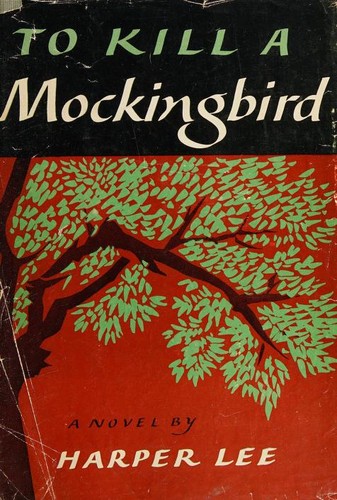
To Kill a Mockingbird
Harper Lee · 1926–2016 · United States
Why it matters
A lawyer defends a Black man falsely accused of rape in Depression-era Alabama, seen through his young daughter's eyes. Lee's only published novel for decades became American schools' most enduring lesson in moral courage.
At a glance
A plainspoken child narrator keeps prose accessible despite its serious themes.
Deep dive
Why a novel that indicts Maycomb's racism still centers a white lawyer as its moral compass — and how a 2015 discovery upended everything readers thought they knew about Atticus.
Written for readers who have finished the book. No plot recap, and nothing here is safe to read first.
Themes & symbolism
The title symbol is stated outright, twice, so there's no missing it: it's a sin to kill a mockingbird because the bird does nothing but sing. Atticus applies the label to Tom Robinson, destroyed for a courtesy — pitying a white woman — that curdles into a capital charge; Miss Maudie applies it to Boo Radley, punished for years by his own family before the town punishes him again with gossip. The novel yokes these two persecutions together so the reader can't read one as an aberration and the other as folklore — both are Maycomb doing, patiently and repeatedly, the same thing to anyone who doesn't fit.
That structure is also the book's most contested feature: the trial's actual victim gets almost no interiority — Tom exists to be wronged, to test Atticus, and to die offstage, shot attempting a prison-yard escape the narrative barely pauses over. Scout's naivety is the lens the whole book depends on, and it's a convenient one: injustice registers as something a good white family can be pained by and eloquent about, rather than something Black Maycomb has to survive daily, largely in the margins of Scout's narration. Lee gives the mad-dog scene — Atticus, revealed as the town's best shot, dispatching a rabid animal on the street — an almost wishful clarity the courtroom pointedly refuses him: racism, unlike Tim Johnson, doesn't go down in one bullet.
Atticus After Watchman
Lee's Go Set a Watchman, written first and published in 2015 as a 'sequel' set two decades later, showed an older Atticus attending Klan-adjacent citizens' council meetings and arguing against federal integration — a discovery that sent readers back to Mockingbird looking for cracks in the saint. They're there in outline if not in substance: this Atticus defends Tom because the law and his own code demand it, not because he believes in racial equality as such, and his famous generosity of spirit ('climb into his skin and walk around in it') gets extended to Boo, Mayella, even Bob Ewell, but is never quite tested against believing Black Maycomb his equal. Watchman didn't rewrite the earlier book so much as reveal it had always left that question conveniently unasked.
Two Novels in One Skin
Part One is small-town gothic — a shut-in neighbor, dares on a haunted porch, gifts left in a tree — and Part Two is a courtroom procedural; Lee fuses them by making Boo the answer to both. The children spend the book terrified of a man who turns out to be their protector, a structural rhyme for a town certain of a man's guilt who turns out innocent. Both halves resolve on the same lesson stated early and cashed out late: you don't know someone until you've stood in their shoes, whether that someone hides behind a door or a witness stand.
The last seal: what actually happens, and why it lands the way it does.
The ending, explained
Bob Ewell, humiliated by the trial despite winning it, ambushes Jem and Scout in the dark on Halloween night; Boo Radley, watching over them as he apparently always has, intervenes and stabs Ewell to death. Sheriff Tate, arriving to find Boo the obvious agent, insists on a quieter story — that Ewell fell on his own knife — over Atticus's initial instinct to let the truth run its course for Jem's sake. Tate's reasoning is explicitly about mercy, not justice: dragging a reclusive, harmless man into the town's spotlight would itself be, in the book's own vocabulary, a sin against a mockingbird. Scout walks Boo home, pauses on his porch, and imagines the street from his vantage for the first time — the novel's central lesson completed not as an argument but as an act of literal, physical perspective.
Where to go next
 Mordecai Richler · 1959The Apprenticeship of Duddy KravitzLvl 4Fast paced
 James Baldwin · 1956Giovanni's RoomLvl 5Medium pace
 Carson McCullers · 1940The Heart Is a Lonely HunterLvl 5Medium pace
 Steven Millhauser · 1996Martin Dressler: The Tale of an American DreamerLvl 5Medium pace
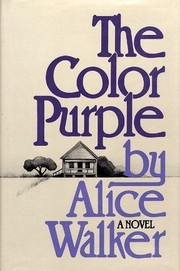 Alice Walker · 1982The Color PurpleLvl 5Fast paced
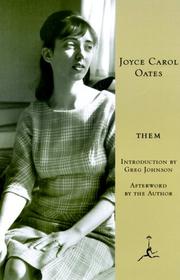 Joyce Carol Oates · 1969themLvl 6Medium pace