
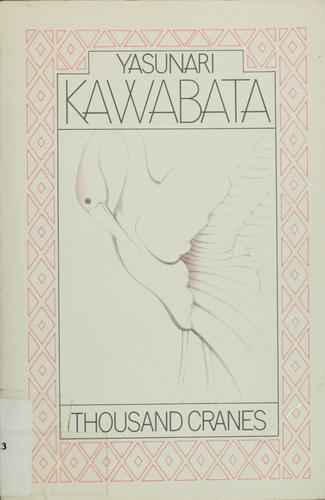
Thousand Cranes
Yasunari Kawabata · 1899–1972 · Japan
Originally Senbazuru (Japanese) · translated by Edward Seidensticker
Why it matters
A tea ceremony introduces Kikuji to his late father's former mistress, then her daughter, guilt passed hand to hand like the bowls themselves. Kawabata's most ritualized novel: inheritance as a stain no one can quite wash out.
At a glance
Spare, elliptical prose where tea-ceremony ritual carries unstated emotional freight.
Deep dive
Why a tea ceremony meant to arrange Kikuji's marriage instead sets him on a path toward the one woman in the room his dead father had already loved.
Written for readers who have finished the book. No plot recap, and nothing here is safe to read first.
Themes & symbolism
Kikuji arrives at Chikako's tea ceremony assuming it's a memorial gesture toward his recently dead father and discovers, mid-ceremony, that it's actually a matchmaking session, Chikako maneuvering to pair him with her student Yukiko Inamura, recognizable throughout by the thousand-crane pattern on the furoshiki cloth she carries. Kawabata uses the tea ceremony's exacting formal etiquette, the precise handling of bowls, the ritualized praise of utensils, as a structure of inherited obligation that Kikuji can perform flawlessly while feeling almost nothing underneath it, and the gap between correct form and actual feeling becomes the novel's central instrument for measuring every relationship that follows.
Mrs. Ota, another of Kikuji's father's former mistresses, is present at the same ceremony, and what develops between her and Kikuji reads less like romance than inheritance: he's drawn to her specifically because his father once was, and she seems to receive him partly as a substitute for the man she actually loved. A prized Shino tea bowl that belonged first to Kikuji's father and then to Mrs. Ota becomes the novel's most loaded object, changing hands between characters the way desire itself keeps changing hands here, always secondhand, always carrying someone else's fingerprints before it reaches whoever is holding it now.
Chikako's Birthmark and the Limits of Etiquette
Chikako, the matchmaking former mistress whose scheme opens the novel, carries a large birthmark across her chest that she has spent decades concealing, and Kawabata returns to it repeatedly as the one purely physical fact none of the novel's ritualized elegance can absorb or beautify. Kikuji recalls, with plain discomfort, having seen it as a boy nursing at her breast during a household visit, and that unbidden memory keeps surfacing whenever Chikako tries to present herself as an authority on taste and propriety. The birthmark works as the novel's rebuke to its own tea-ceremony aestheticism: however carefully the china is chosen and the bows performed, bodies keep carrying facts that etiquette was never built to accommodate.
The last seal: what actually happens, and why it lands the way it does.
The ending, explained
Kikuji and Mrs. Ota's affair collapses under the weight of her own guilt rather than any outside discovery, and she takes her own life not long after their last night together, unable to reconcile her feelings for the son with her memory of the father. Rather than retreating from the wreckage, Kikuji drifts toward Fumiko, Mrs. Ota's daughter, drawn to her by the same confused inheritance that first drew him to her mother. Fumiko, caught between grief for her mother and horror at repeating her mother's exact pattern, eventually disappears from the narrative entirely, a vanishing the novel never explains outright but frames closely enough alongside her mother's death to imply she has taken the same way out. Kawabata ends with Kikuji alone, having managed, without ever quite choosing to, to inherit his father's entire romantic history down to its final, self-destructive term.
Where to go next
 Yasunari Kawabata · 1947Snow CountryLvl 5Slow burn
 Yasunari Kawabata · 1954The Sound of the MountainLvl 5Slow burn
 Yasunari Kawabata · 1954The Master of GoLvl 5Slow burn
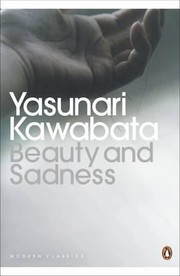 Yasunari Kawabata · 1965Beauty and SadnessLvl 6Slow burn
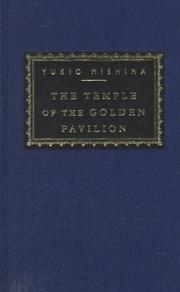 Yukio Mishima · 1956The Temple of the Golden PavilionLvl 6Slow burn
 Jun'ichirō Tanizaki · 1925NaomiLvl 4Fast paced