
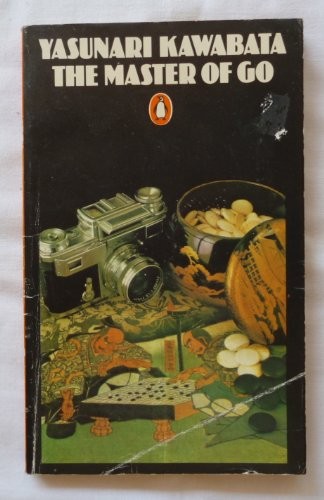
The Master of Go
Yasunari Kawabata · 1899–1972 · Japan
Originally Meijin (Japanese) · translated by Edward Seidensticker
Why it matters
A real 1938 championship match, which Kawabata covered as a reporter, becomes an elegy: the aging Master's ritual formality against a brisk modern challenger's clock-watching efficiency. A whole vanishing Japan compressed into one board game.
At a glance
Restrained, reportorial prose whose meaning depends on tracking a slow game's stakes.
Deep dive
Why Kawabata, who covered the actual 1938 championship as a newspaper reporter, waited over a decade to turn a Go match into an elegy for an entire vanishing idea of Japan.
Written for readers who have finished the book. No plot recap, and nothing here is safe to read first.
Themes & symbolism
The match at this novel's center genuinely happened: over fourteen sessions between June and December 1938, the aging Master Shusai, undefeated for his entire career within the Honinbo lineage, played a championship match against a far younger challenger the novel calls Otake, standing in for the real Kitani Minoru. Kawabata covered the actual games as a newspaper reporter and spent over a decade turning his reportage into fiction, and The Master of Go keeps enough of that journalistic texture, exact move counts, the layout of the room, the referee's rulings on time, that the novel reads less like an invented story than like history slowed down enough to notice what it actually contained.
Kawabata builds the contrast between the two players into a contrast between two entire relationships to time. The Master treats the game according to an older code, where a player's dignity and an opponent's comfort matter as much as the board, and where sealed moves and adjournments follow custom rather than rigid enforcement; Otake, representing a newer, more procedural generation of players, insists on strict enforcement of time limits and sealed-move rules that put the aging, ailing Master under a pressure the old etiquette had never required him to bear. Neither man is villain or hero here; the match is simply the moment one entire way of playing, and by clear extension one entire way of being Japanese, loses its authority to a colder, fairer, more modern one.
A Novelist Refereeing His Own Material
Kawabata's dual role, actual match reporter first and novelist second, gives The Master of Go an unusual authority most historical fiction can't claim: he was in the room, keeping the same kind of notes a Go correspondent keeps, for games whose outcome he didn't yet know would eventually read like tragedy. That reportorial habit shows in the novel's patience with technical detail most readers won't fully follow, specific board positions and the exact wording of procedural disputes treated with the same gravity as the human drama surrounding them, because for Kawabata covering the real event, they had been exactly that important.
The last seal: what actually happens, and why it lands the way it does.
The ending, explained
Deep into the match's final sessions, the Master makes a move, recorded in the novel as White 130, that both players and the narrator recognize immediately as decisive; from that point the outcome is essentially settled even though play continues out of formality and pride. The Master loses by five points, ending his undefeated record in a single, meticulously documented sitting. Kawabata closes the novel not with the game's final stone but with an epilogue reporting the Master's death roughly a year later, in January 1940, and lets the narrator's grief-tinged speculation stand as the book's last word: that the loss itself, not any disease, is what finally used up whatever had kept the old Master going, an entire era of formal Japanese culture concluding in the same match that ended his career.
Where to go next
 Yasunari Kawabata · 1947Snow CountryLvl 5Slow burn
 Yasunari Kawabata · 1952Thousand CranesLvl 5Slow burn
 Yasunari Kawabata · 1954The Sound of the MountainLvl 5Slow burn
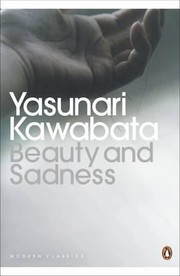 Yasunari Kawabata · 1965Beauty and SadnessLvl 6Slow burn
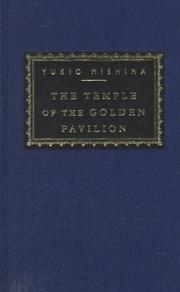 Yukio Mishima · 1956The Temple of the Golden PavilionLvl 6Slow burn
 Jun'ichirō Tanizaki · 1925NaomiLvl 4Fast paced