
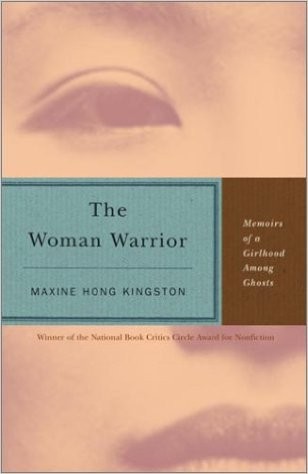
The Woman Warrior
Maxine Hong Kingston · b. 1940 · United States
Why it matters
A Chinese-American girlhood in Stockton, California, is braided with her mother's ghost stories and Chinese legend. A landmark fusion of memoir and myth that reshaped Asian-American literature.
At a glance
Blends memoir with myth in a genre-blurring, nonlinear structure.
Deep dive
Why the book keeps swapping legend for memoir and back again without ever telling you which parts are 'true' — and what that refusal is arguing about growing up caught between two languages.
Written for readers who have finished the book. No plot recap, and nothing here is safe to read first.
Themes & symbolism
Kingston builds the book out of talk-story, her mother Brave Orchid's habit of transmitting history, warning, and myth in the same breath, and refuses to sort the resulting material into fact and fable for the reader — the aunt who drowned herself and her infant after being shamed for adultery, the swordswoman Fa Mu Lan who avenges her village with words carved into her back, and Brave Orchid's own account of practicing medicine and facing down a ghost in a Chinese dormitory all sit on the same narrative footing. That refusal is the book's argument: for a Chinese-American girl assembling a self out of a mother tongue she can barely speak and a village she's never seen, legend and family history arrive with equal authority and equal unreliability, and pretending otherwise would be dishonest to how identity actually gets built.
Silence and voice run through the book as the real stakes — the narrator's own throat, in her telling, was nearly cut by her mother to loosen her tongue, and she spends her childhood torn between the American classroom's demand that she speak up and a Chinese-immigrant world that prizes daughters' silence and erases women who talk too much, like the aunt whose name the family refuses to say aloud, punishing her by deletion. No Name Woman haunts the book less as a ghost than as a warning about what happens to women's stories that go untold, which is exactly the erasure Kingston's own book exists to refuse.
Memoir or Myth: A Genre the Book Wouldn't Sit Still For
When The Woman Warrior appeared in 1976, critics and library catalogers alike didn't know where to shelve it — it won the National Book Critics Circle Award for nonfiction, yet its most vivid chapters are demonstrably invented or borrowed wholesale from Chinese legend, and Kingston was later criticized, notably by fellow Chinese-American writer Frank Chin, for fabricating and distorting myth to fit an American memoir market. Kingston's defense was that the blending is the book's subject, not a lapse in its research: growing up between two tellings of the world, you inherit both the facts and the fictions your family uses to survive them, and a 'pure' memoir would falsify that inheritance far more than an openly hybrid one does. The controversy itself became part of the book's legacy, opening a still-running argument about who gets to authenticate immigrant experience and by what genre's rules.
The last seal: what actually happens, and why it lands the way it does.
The ending, explained
The book has no single plot to resolve, but it closes on the story of Ts'ai Yen, a poet abducted by nomadic invaders who lives among them for twelve years, bears children in a language and culture not her own, and eventually returns home bringing songs she composed in captivity — barbarian melodies fitted to Chinese words, which her own people take up and preserve. Kingston hands this legend to us as something she and her mother built together, line by line, the two of them finishing each other's version of the tale, and lets it stand as her closing image of herself: a woman fluent in exactly the kind of double inheritance — American tongue, Chinese song — that the rest of the book has been struggling to reconcile. It's not an ending so much as a demonstration that translation across an impossible gap is still possible, which is the most hopeful claim the book allows itself.
Where to go next
 Maxine Hong Kingston · 1980China MenLvl 5Medium pace
 Reinaldo Arenas · 1969HallucinationsLvl 7Fast paced
 Edward P. Jones · 2003The Known WorldLvl 6Slow burn
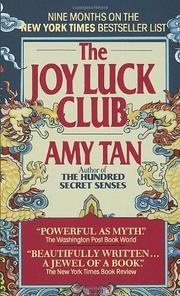 Amy Tan · 1989The Joy Luck ClubLvl 4Medium pace
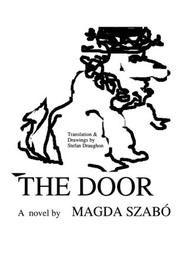 Magda Szabó · 1987The DoorLvl 5Slow burn
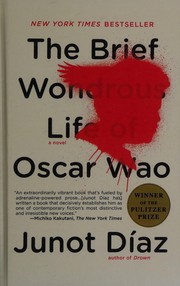 Junot Díaz · 2007The Brief Wondrous Life of Oscar WaoLvl 7Fast paced