
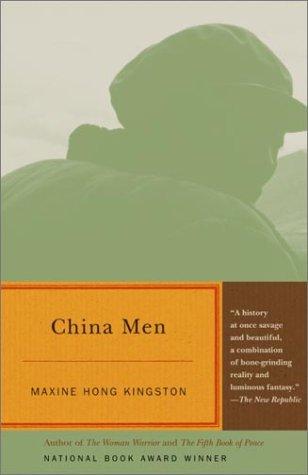
China Men
Maxine Hong Kingston · b. 1940 · United States
Why it matters
Kingston reconstructs the buried histories of her father and grandfathers (railroad laborers, sugar plantation workers, undocumented immigrants) erased from official American memory. The male counterpart to The Woman Warrior.
At a glance
Interwoven generations and myth-history blending require tracking multiple timelines.
Deep dive
What Kingston sets directly beside her grandfather's own dynamite-and-basket work on the transcontinental railroad, and why she keeps interrupting the family history with retellings of old Chinese myths instead of footnotes.
Written for readers who have finished the book. No plot recap, and nothing here is safe to read first.
Themes & symbolism
Kingston builds the book around three generations of male ancestors largely erased from the American record: a great-grandfather cutting cane on Hawaiian sugar plantations, a grandfather, Ah Goong, lowered by basket down cliff faces to set dynamite charges building the Central Pacific's western route through the Sierra Nevada, and a father who enters the country illegally, is detained at Angel Island, and eventually runs a laundry and a gambling house. Kingston sets actual legal text, the flat, bureaucratic language of the Chinese Exclusion Act and related immigration statutes, directly against these family narratives, letting the document's plain prohibitions sit beside the labor and daring the archive erased in the first place.
Interspersed among the generational chapters are retellings of classical Chinese stories, most pointedly the myth of Tang Ao, forced into women's clothing and foot-binding upon entering the Land of Women, a gender-inversion tale Kingston uses to comment obliquely on the emasculation Chinese immigrant men experienced under American exclusion laws that barred them from bringing wives or families into the country for decades. Myth here isn't decoration, it's argument, a way of narrating experience the official record refused to document at all, filling the archive's silences with an older kind of truth-telling.
The Photograph With No Chinese Faces In It
The famous 1869 golden spike photograph at Promontory Summit, celebrating the transcontinental railroad's completion, includes no Chinese laborers, despite the fact that Chinese workers built nearly the entire western half of the line under conditions that killed hundreds of them. Kingston's account of Ah Goong's basket work over the cliffs functions as a direct correction to that image, insisting on a labor the national myth of the railroad had already decided to leave out of its own commemorative photograph.
BaBa's Silence and What the Book Does Instead of Asking Him
Kingston's own father stays cagey and elusive about his illegal entry even as an adult subject of her questioning, refusing to confirm or deny most of what she narrates about him. Rather than treat that silence as a research failure, the book turns the uncertainty into method, presenting multiple possible versions of how BaBa entered the country side by side and refusing to settle which, if any, is literally true, since the withholding was itself part of what surviving exclusion required.
Where to go next
 Maxine Hong Kingston · 1976The Woman WarriorLvl 6Slow burn
 Reinaldo Arenas · 1969HallucinationsLvl 7Fast paced
 Edward P. Jones · 2003The Known WorldLvl 6Slow burn
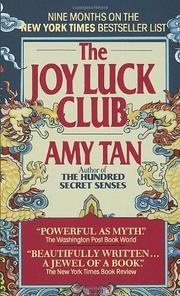 Amy Tan · 1989The Joy Luck ClubLvl 4Medium pace
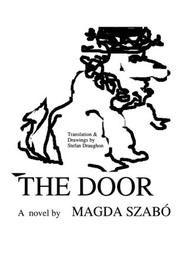 Magda Szabó · 1987The DoorLvl 5Slow burn
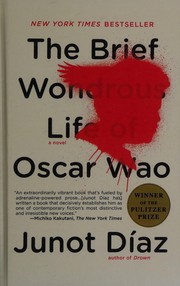 Junot Díaz · 2007The Brief Wondrous Life of Oscar WaoLvl 7Fast paced