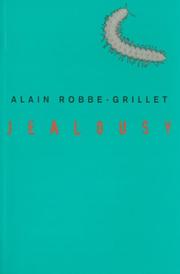
The Voyeur
Alain Robbe-Grillet · 1922–2008 · France
Originally Le Voyeur (French)
Why it matters
A traveling watch salesman returns to his native island, and a girl is found dead: the narrative circling the crime's scene while never quite naming what happened. The nouveau roman's obsessive surfaces applied to a possible murder.
At a glance
Obsessive, repetitive object-description and a circling, elliptical timeline obscure the central crime.
Deep dive
A traveling watch salesman returns to the island where he grew up for one working day, and Robbe-Grillet builds the whole novel around the exact hours his own account can't seem to make add up.
Written for readers who have finished the book. No plot recap, and nothing here is safe to read first.
Themes & symbolism
Mathias spends his single day on the island selling watches door to door, and Robbe-Grillet renders that day in a prose so obsessively attentive to objects, a coiled length of rope, a seagull's flight, a scrap of paper on the ground, that the descriptions start repeating a single shape, a figure eight, across completely unrelated things until the pattern itself becomes more insistent than any character's stated thought. The novel gives Mathias almost no conventional interiority; what substitutes for psychology is this compulsive visual fixation, and the reader has to infer what Mathias is thinking, or avoiding thinking, entirely from what his eyes keep returning to.
At the center of the day sits a young girl, Jacqueline, whom Mathias has arranged to meet, and around the hour of that meeting the narrative develops a literal gap: time that doesn't add up, a description that breaks off mid-scene, an account of the same period given twice with small, telling inconsistencies. Robbe-Grillet never narrates directly whatever happens to Jacqueline; the crime, if it is a crime, exists only as the shape of what the text refuses to say, structurally identical to the figure-eight motif that keeps surfacing everywhere else, an absence the prose circles without ever landing on.
Description as Alibi
Robbe-Grillet's theoretical writing on the nouveau roman argued that fiction should abandon the traditional novel's confident access to character motive in favor of pure, exterior description, things rendered exactly as a camera would render them, without psychological interpretation supplied by the narrator. The Voyeur puts that theory under real pressure: Mathias's hyper-precise attention to objects reads, by the novel's second half, less like neutral observation than active evasion, a mind generating meticulous surface detail specifically to avoid registering what happened during the hours his own account keeps skating past. The technique that was meant to eliminate psychology ends up staging one of the most precise psychological portraits in the movement, a consciousness caught in the act of covering its own tracks.
The last seal: what actually happens, and why it lands the way it does.
The ending, explained
Mathias, having missed the boat that was meant to take him off the island that evening, spends an extra day retracing his own route, ostensibly finishing his sales rounds, and the narrative's repeated, subtly shifting accounts of his earlier movements make clear without ever stating it outright that he assaulted Jacqueline during the gap the text left blank, disposing of her body near the cliffs he keeps returning to on his walks. When the islanders begin searching for the missing girl, Mathias moves through the investigation with the same flat, object-fixated attention he's shown throughout, betraying nothing, and boards the delayed boat off the island entirely unsuspected. Robbe-Grillet ends the novel exactly where it began, on the boat, mirroring its opening structure so precisely that the whole intervening day reads, in retrospect, as a loop the text has let the reader complete only by noticing what kept refusing to be shown directly.