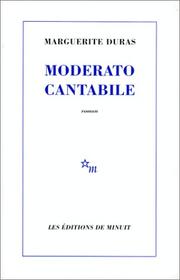
The Lover
Marguerite Duras · 1914–1996 · France / Vietnam
Originally L'Amant (French) · translated by Barbara Bray
Why it matters
Colonial Saigon, a fifteen-year-old French girl, a wealthy Chinese man: memory circling an affair for fifty years until it became this hypnotic, stripped masterpiece. The Goncourt winner that made Duras world-famous at seventy.
At a glance
Fragmented, achronological, and elliptical, circling memory rather than narrating linearly.
Deep dive
The affair itself takes up a few pages; the other fifty years spent trying and failing to tell it straight is the actual novel.
Written for readers who have finished the book. No plot recap, and nothing here is safe to read first.
Themes & symbolism
The affair is almost incidental to what "The Lover" is actually built to do, which is dramatize the impossibility of narrating memory straight. The narrator drifts between first and third person, sometimes mid-paragraph, and refuses chronological order entirely, circling back to the ferry crossing, the family dinner table, the brother's violence, and the lover's hands again and again rather than advancing through them, because for Duras memory does not move forward — it returns, obsessively, to the same handful of images, each time slightly altered by the distance of the fifty years since. The elderly narrator's present constantly intrudes on the reconstructed adolescent scene, reminding the reader that everything here has already passed through decades of retelling and half-invention before reaching the page, so the book is honest about its own unreliability in a way most memoirs never bother to be.
Underneath the fragmented telling sits a rigid structure the narrator never gets to choose her way out of: colonial racial hierarchy and her own family's poverty and racism make any real future with the lover unthinkable from the start, regardless of what either of them feels, while his money is what actually keeps her family solvent, discreetly covering the debts her violent, opium-addicted older brother keeps running up. The intimacy of the affair and the transactional, hierarchical reality around it are never separated in the text — desire and colonial economics run through the same sentences — which is part of why the novel refuses to romanticize the relationship even while treating it, finally, as real.
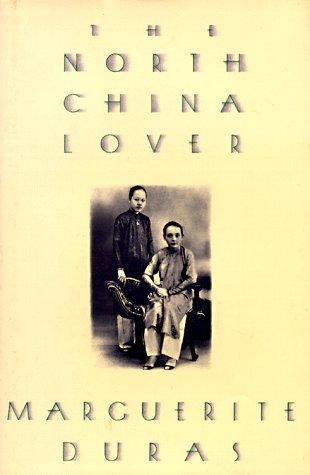
The narrator opens the book by insisting that the photograph that would matter most, the one of herself at fifteen crossing the Mekong in a man's fedora and gold lamé shoes, was never taken — no one thought the girl she was worth photographing at the time. That absence is the engine of the whole project: the novel exists to build, in prose, the image that reality failed to preserve, which is why it keeps circling the same handful of details (the hat, the shoes, the ferry, the car) rather than telling the story once and moving on. Memory here isn't retrieval; it's reconstruction of a picture that was never taken in the first place.
A Style Stripped to the Bone
Duras writes the affair itself in short, flat, declarative sentences with almost no explicit physical description and no quotation marks to separate speech from narration, producing a curiously numb, distanced register even at the book's most intimate moments. That flatness is not reticence; it is the sound of an experience turned over so many times across fifty years of retelling that it has worn smooth, its rawest edges polished into something closer to incantation than confession — which is exactly why critics reach for words like hypnotic rather than explicit to describe a book that is, in plain content, about a fifteen-year-old's sexual awakening.
The last seal: what actually happens, and why it lands the way it does.
The ending, explained
The affair ends the ordinary way colonial power ends things: the lover's father will not permit a marriage to a poor white girl regardless of his son's wishes, and the narrator's family returns to France. Years later, from Paris, she learns he married a Chinese woman as his family required. The novel's actual close comes further on still: decades after the affair, during a visit to Paris, he telephones her and tells her simply that he never stopped loving her and would love her until he died. Duras places that single, unadorned confession at the end of a book built entirely from circling and revision as the one fact the fragmented memory never has to reconstruct or doubt — the only thing about the whole affair that time never altered.