
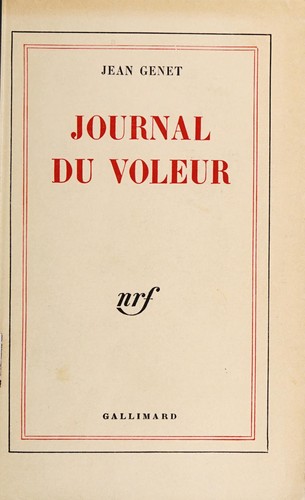
The Thief's Journal
Jean Genet · 1910–1986 · France
Originally Journal du voleur (French) · translated by Bernard Frechtman
Why it matters
Genet recounts his years as a beggar, thief, and male prostitute across 1930s Europe as a defiant aesthetic credo. A confessional that turns abjection and betrayal into a kind of sainthood.
At a glance
Ornate, incantatory prose that inverts conventional morality without warning.
Deep dive
How a memoir of theft, prison, and male prostitution across 1930s Europe turns betrayal itself into the only value its author will admit to holding.
Written for readers who have finished the book. No plot recap, and nothing here is safe to read first.
Themes & symbolism
Genet narrates his years drifting as a beggar, thief, and male prostitute through Barcelona, Antwerp, and occupied France in a prose built to reverse every value his readers arrive with, filth described with the vocabulary usually reserved for altars, a police record treated as a body of work. He calls the book a mausoleum for men he loved and betrayed, and the aestheticizing is not decoration on top of the degradation, it is the argument: society's outcasts, the informer, the pimp, the convict, get the same reverence Genet's Catholic education once trained him to give saints.
Stilitano, the one-handed pimp and thief Genet trails across Spain in a kind of worship, keeps his stump wrapped in a pink bandage that becomes the book's most fetishized object, a wound Genet returns to describing with more tenderness than he gives any intact body. A mutilated man commanding total sexual and criminal authority over everyone around him is Genet's clearest thesis in miniature, that power and desire attach to the wound rather than despite it, and that his own attraction to abjection is not shame he's confessing but a value system he's defending.
Betrayal as the Only Fidelity
Java, an informer who sells out his own circle to the police without apparent guilt, gets none of the moral condemnation a conventional memoir would supply; Genet treats treachery as the one bond nobody can fake, since it costs something real, unlike loyalty, which he suspects is usually just convenience wearing a nicer name. By the book's close Genet turns the accusation on himself, admitting that writing this journal at all, naming men who trusted him with their real names and histories, is its own act of betrayal, the closing pages less a conclusion than a confession that the confession itself was never innocent.
The Book Sartre Turned Into Seven Hundred Pages
Jean Cocteau and Jean-Paul Sartre championed Genet's writing to get him pardoned from a looming life sentence under France's habitual-offender law, and this journal supplied Sartre with the raw material for Saint Genet, Actor and Martyr, a study nearly as long as Genet's entire output to that point. Genet reportedly stopped writing fiction for years after reading Sartre's exhaustive account of his own psychology, saying it explained him to himself so thoroughly there was nothing left to discover by writing further, a strange debt for one book to owe another.
Where to go next
 Jean Genet · 1943Our Lady of the FlowersLvl 8Slow burn
 Nathalie Sarraute · 1939TropismsLvl 7Slow burn
 Simone de Beauvoir · 1954The MandarinsLvl 6Slow burn
 Georges Bernanos · 1936Diary of a Country PriestLvl 6Slow burn
 Tove Ditlevsen · 1971The Copenhagen TrilogyLvl 4Medium pace
 François Mauriac · 1927Thérèse DesqueyrouxLvl 5Slow burn