

Our Lady of the Flowers
Jean Genet · 1910–1986 · France
Originally Notre-Dame des Fleurs (French) · translated by Bernard Frechtman
Why it matters
Written in prison, this novel transfigures Parisian pimps, drag queens, and murderers into a baroque, sacrilegious liturgy of criminal beauty. Sartre and Cocteau championed it into print and made Genet's reputation overnight.
At a glance
Baroque, incantatory sentences and a deliberately unstable narrating voice.
Deep dive
A prisoner conjures Montmartre's pimps and drag queens from his cell and dresses their crimes in the language of saints and martyrs — sincere devotion, not satire, aimed at everything respectable society calls unforgivable.
Written for readers who have finished the book. No plot recap, and nothing here is safe to read first.
Themes & symbolism
Genet frames the entire novel as an act of solitary devotion — a version of himself narrates from prison, imaginatively conjuring the criminal demimonde of Montmartre while masturbating, which licenses the book's wild swings in reliability, chronology, and tone as the workings of fantasy rather than reportage. His real formal project is applying the vocabulary of Catholic liturgy and hagiography — saints, flowers, radiance, transfiguration, martyrdom — directly onto pimps, prostitutes, and murderers, and he means it: this isn't satire of religious language but a genuine claim that abjection and criminality carry their own authentic sanctity, one bourgeois moral categories are simply built to miss. Our Lady of the Flowers himself, a beautiful, nearly silent young murderer, receives the novel's most reverent prose for the act polite society finds least forgivable, which is precisely Genet's point.
Betrayal saturates every relationship in the book — Darling's repeated infidelities to Divine, prisoners informing on each other, identities that shift and destabilize from paragraph to paragraph — and Genet refuses to treat it as moral failure requiring condemnation. It's simply one more texture of the world he's building, evidence that his outcast sacred order runs on different rules than the respectable one, not a corrupted version of it. Genet's own biography — abandoned in infancy, raised through foster care and reformatories, a long criminal record before Sartre and Cocteau championed him into the literary establishment and secured his pardon — sits directly behind the novel's larger ambition: inverting the bourgeois moral hierarchy entirely and insisting dignity, even holiness, belongs most to those it excludes.
A Cell as a Cathedral
The novel has no plotted climax to build toward because its structure is the fantasy of a man alone in a cell, digressing, doubling back, inventing and re-inventing his characters' pasts as his arousal and imagination demand rather than as a story requires. That non-linearity is the method, not a flaw in it: Genet is less interested in what happens next to Divine or Darling than in dwelling, ecstatically and at length, inside whichever image currently holds his attention, the way a worshipper lingers before one particular icon rather than moving through a story.
The last seal: what actually happens, and why it lands the way it does.
The ending, explained
The fantasia doesn't resolve so much as wind down: Divine's decline into illness and eventual death is narrated at a remove, imagined by Genet from his cell rather than staged as a scene, while Our Lady's presumed execution for his crime arrives with the same hushed, liturgical reverence Genet has granted him throughout, a martyrdom rather than a punishment. Neither ending is played for tragic weight in the conventional sense — the book has spent itself insisting these figures already achieved a kind of sainthood in life, so their deaths simply complete the devotion rather than deliver a moral.
Where to go next
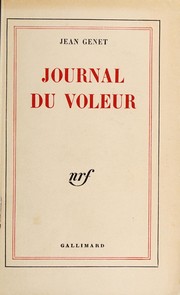 Jean Genet · 1949The Thief's JournalLvl 7Slow burn
 Nathalie Sarraute · 1939TropismsLvl 7Slow burn
 Simone de Beauvoir · 1954The MandarinsLvl 6Slow burn
 Georges Bernanos · 1936Diary of a Country PriestLvl 6Slow burn
 Tove Ditlevsen · 1971The Copenhagen TrilogyLvl 4Medium pace
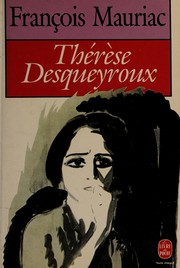 François Mauriac · 1927Thérèse DesqueyrouxLvl 5Slow burn