
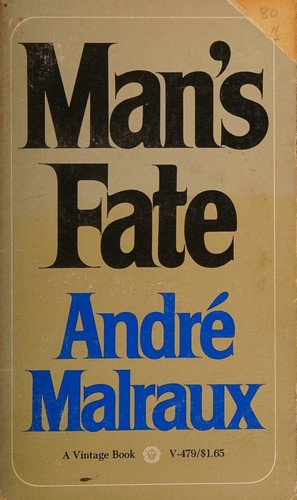
Man's Fate
André Malraux · 1901–1976 · France
Originally La Condition humaine (French)
Why it matters
Communist insurgents in 1927 Shanghai face torture, betrayal, and death in the failed uprising against Chiang Kai-shek's forces. Malraux weighs revolutionary solidarity and individual mortality with a philosopher's seriousness.
At a glance
Philosophical dialogue embedded in a dense revolutionary plot.
Deep dive
Communist insurgents in a failing 1927 Shanghai uprising are running out of options fast, and Malraux is far more interested in what a person can still choose under total pressure than in whether the revolution itself succeeds.
Written for readers who have finished the book. No plot recap, and nothing here is safe to read first.
Themes & symbolism
Malraux structures the failed Shanghai uprising as a philosophical laboratory for testing what 'la condition humaine' actually permits: each major character — the disciplined revolutionary Kyo, the terrorist bomber Chen, the aging idealist Old Gisors, the mercenary opportunist Clappique — represents a different answer to the same question of how a person locates meaning against mortality and political defeat, and the novel's real subject is less the Shanghai insurrection's tactics than this parallel argument being conducted through action rather than dialogue.
Chen's assassination of a Chinese official early in the novel, and his growing, almost mystical addiction to the act of killing as a form of self-transcendence, is Malraux's darkest answer to the question of individual meaning under revolutionary violence — Chen comes to want death, his own included, more than he wants the revolution's success, and his solitary, doomed attempt at suicide-bombing Chiang Kai-shek's car late in the novel plays as the logical endpoint of treating violent action as a substitute for metaphysical certainty.
Kyo's dedication to Communist solidarity and Katov's eventual self-sacrifice function as the novel's counter-argument to Chen's nihilism: where Chen finds meaning in destruction pursued alone, Kyo and Katov find it in chosen solidarity with other men facing the same death, and Malraux's famous insistence, through Old Gisors, that dignity lies in transforming 'as wide an experience as possible into as much consciousness as possible' is dramatized precisely in how each man chooses to die rather than in whether the uprising they die for accomplishes anything at all.
A Novelist Who Lived What He Wrote
Malraux's own biography reads like a rough draft for his fiction's obsessions: adventurer and art smuggler in French Indochina in his twenties, organizer of anti-colonial activity in China and involvement with revolutionary movements around the period the novel depicts, later a Republican air squadron commander in the Spanish Civil War and a French Resistance leader, and eventually de Gaulle's culture minister. That itinerant record of action lends the novel's philosophical arguments about commitment and meaning an authority that pure invention couldn't match — Malraux wasn't theorizing revolutionary sacrifice from a study, he'd organized and witnessed versions of exactly the choices his characters face, which is part of why the 1933 Prix Goncourt jury and generations of readers since have treated the book's ideas as earned rather than merely asserted.
The last seal: what actually happens, and why it lands the way it does.
The ending, explained
As Chiang Kai-shek's forces crush the Shanghai Communists, Kyo is captured and, rather than face a show trial and further torture, takes the cyanide capsule he's carried the whole novel for exactly this purpose, choosing the manner and moment of his own death as the last free act available to him. Katov, captured alongside two younger, more frightened comrades and facing not a firing squad but being burned alive in a locomotive furnace, gives away his own cyanide pill to the two men so they can die painlessly, keeping for himself only the worse death — an act of pure, non-strategic solidarity that advances no cause, which is exactly why Malraux treats it as the novel's clearest statement of dignity under total defeat. May, Kyo's widow, and Old Gisors survive into a muted coda, the revolution's failure absorbed into the larger claim that meaning was never contingent on political victory — only on how completely a person meets the moment actually given to them.
Where to go next
 André Malraux · 1937Man's HopeLvl 6Medium pace
 Simone de Beauvoir · 1954The MandarinsLvl 6Slow burn
 Louis-Ferdinand Céline · 1932Journey to the End of the NightLvl 6Fast paced
 Roger Martin du Gard · 1940The ThibaultsLvl 6Slow burn
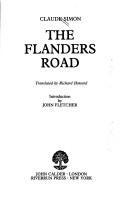 Claude Simon · 1960The Flanders RoadLvl 9Slow burn
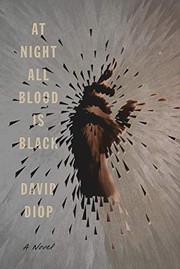 David Diop · 2018At Night All Blood Is BlackLvl 5Fast paced