
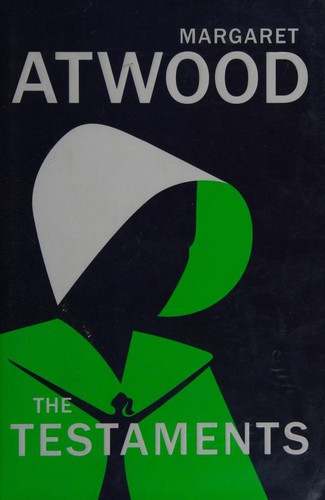
The Testaments
Margaret Atwood · b. 1939 · Canada
Why it matters
Fifteen years after Gilead's fall begins, three women's testimonies (including a young Aunt training brutal enforcers) reveal how the regime was already rotting from within. Atwood's Booker-winning sequel finally answers questions The Handmaid's Tale left deliberately open.
At a glance
Three alternating first-person testimonies keep pace brisk despite dense worldbuilding.
Deep dive
Why Atwood hands Gilead's most feared enforcer her own testimony alongside two much younger women's — and what three competing, self-interested voices can tell you that one trustworthy narrator wouldn't.
Written for readers who have finished the book. No plot recap, and nothing here is safe to read first.
Themes & symbolism
Aunt Lydia's testimony retroactively complicates the purely villainous figure from The Handmaid's Tale by revealing decades of calculated collaboration used as cover: she commits real, unforgivable cruelties to secure institutional power specifically so she can compile blackmail material on Gilead's leadership and eventually smuggle it out. Atwood doesn't redeem the cruelty itself — only complicates the reader's certainty about what complicity under totalitarianism can look like from the inside, since Lydia's usefulness to the resistance required her to remain genuinely, structurally essential to the regime's machinery of punishment for years.
Agnes and Daisy, raised as strangers on opposite sides of the Gilead–Canada border, are revealed as sisters — daughters of the woman known as Offred from the first novel — and their eventual convergence functions as this book's answer to that novel's famously unresolved ending. Offred's own fate stays genuinely unknown even here, but her daughters instead carry the consequences of her escape forward, engineering, without ever knowing they were chosen for it, the collapse of the regime's cover from within. It's a deliberate structural choice: closure arrives through inheritance rather than through the missing woman herself.
Atwood tells the whole book through three first-person testimonies rather than one, and the device is doing real thematic work, not just plot mechanics: Gilead is a regime built entirely on controlling which women are permitted to speak and which are permitted only to be spoken about, and a novel structured as three uncensored, competing testimonies is itself a small act of the exact resistance its characters are risking their lives to perform. Each voice is also deliberately partial and self-interested — Lydia's testimony in particular reads as self-justifying even where it's most honest — so the reader has to do the work of triangulating a fuller truth that no single witness is trusted to deliver alone.
Filling In a Deliberate Silence
The Handmaid's Tale ended with Offred's fate genuinely open and an academic epilogue treating Gilead as safely, distantly past. The Testaments both honors and extends that device with its own 2197 symposium framing, confirming Gilead's eventual fall while pointedly still withholding what actually happened to Offred. After thirty-four years of reader speculation, Atwood answers the question the sequel exists to answer — does the regime fall — while leaving the more personal one exactly where she left it the first time.
The last seal: what actually happens, and why it lands the way it does.
The ending, explained
Agnes and Daisy smuggle Lydia's meticulously compiled dossier of Commander Judd's crimes to Mayday operatives in Canada, with Lydia orchestrating the handoff and then taking poison rather than risk capture and interrogation, having secured what she needed to secure. The material triggers the beginning of Gilead's unraveling, confirmed by the historical-symposium epilogue as a slow but real collapse over the following years. It's a genuine payoff rather than another cliffhanger: after decades of the original novel's deliberately open ending, Atwood commits here to showing the machine actually break, engineered by three women who never fully understood, until nearly the end, how they were connected to each other.
Where to go next
 Margaret Atwood · 1985The Handmaid's TaleLvl 5Medium pace
 Margaret Atwood · 1988Cat's EyeLvl 5Medium pace
 Margaret Atwood · 1996Alias GraceLvl 6Medium pace
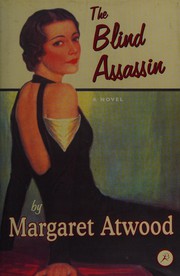 Margaret Atwood · 2000The Blind AssassinLvl 7Slow burn
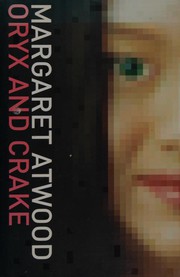 Margaret Atwood · 2003Oryx and CrakeLvl 6Fast paced
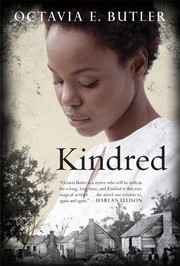 Octavia Butler · 1979KindredLvl 4Fast paced