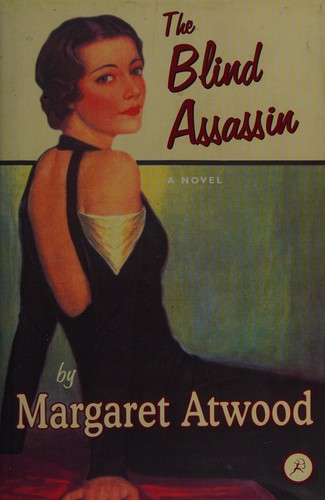
The Blind Assassin
Margaret Atwood · b. 1939 · Canada
Why it matters
An old woman unspools a family tragedy nested inside a pulp science-fiction story inside a scandalous novel. Atwood's Booker winner, a dazzling machine of stories within stories about guilt and authorship.
At a glance
A nested story-within-a-story structure and shifting timelines require patience.
Deep dive
A pulp science-fiction story nested inside a scandalous literary novel nested inside a decades-later memoir — and Atwood needs every one of those layers before she'll say who actually lived any of it.
Written for readers who have finished the book. No plot recap, and nothing here is safe to read first.
Themes & symbolism
Atwood nests a pulp science-fiction story inside a slim, scandalous literary novel credited to Laura Chase after her death, inside Iris's own memoir written near the end of her life — and only in the final stretch reveals that Iris herself wrote 'The Blind Assassin,' that its adulterous affair belonged to her, not Laura, with Alex Thomas, the man both sisters loved. Every earlier excerpt from the novel-within, which reads like Laura's posthumous confession, turns out to have been Iris's disguised one instead. The real subject of all this nesting is authorship as theft and atonement at once: Iris lets the world credit her dead sister with a scandal that was actually hers, then spends decades letting that lie stand as a kind of ongoing penance.
Laura's suicide — driving off a bridge, ruled accidental but understood by the family as deliberate — is recontextualized once the reader learns that Richard, Iris's husband, manipulated and abused Laura, exploiting her literal-mindedness to coerce her and arranging a forced termination of a pregnancy under false pretenses that leaves her unable to go on. Iris's guilt is therefore double: she failed to protect her sister from her own husband, and then absorbed authorship of the affair Laura's 'novel' seemed to confess, so thoroughly that even Iris's own memoir needs a hundred pages of nested fiction before it can state the truth outright.
A Confession Told at One Remove
The pulp science-fiction story the lovers invent together and tell each other in secret becomes the emotional safe room where the real affair could be encoded without either of them stating it directly — a fiction inside the fiction inside the memoir, each layer adding one more degree of deniability. Newspaper clippings interspersed through the book supply the public record as ironic counterpoint to what's actually happening, and the whole architecture amounts to a portrait of a woman for whom the truth was only ever sayable through several layers of invented distance.
The last seal: what actually happens, and why it lands the way it does.
The ending, explained
Dying and largely alone, Iris finishes her memoir specifically for her estranged granddaughter Sabrina, the one family member who might actually want the truth rather than the sanitized version the Chase and Griffen families have maintained for decades. She confesses to being the real author of 'The Blind Assassin' and the real lover in the affair, clearing Laura's memory of an adultery that was never hers while implicating herself in decades of silence around Richard's cruelty — cruelty that, confronted decades earlier, drove Richard to suicide rather than exposure, a fact Iris has also spent a lifetime not saying aloud. The final pages offer not forgiveness but the plain, overdue act of telling the truth to the one person capable of hearing it — too late to help Laura, but perhaps in time to matter to Sabrina.