
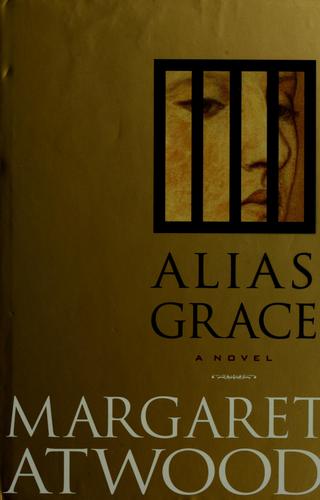
Alias Grace
Margaret Atwood · b. 1939 · Canada
Why it matters
A convicted Irish servant, either murderer or victim of a horrifying miscarriage of justice, tells her story to a doctor probing her memory in 1859 Ontario. Atwood reconstructs a real, unsolved double murder as an unreliable true-crime narration.
At a glance
An unreliable narrator and layered testimony leave the central crime deliberately unresolved.
Deep dive
What the hypnotist's séance recovers, or claims to recover, about the day everything went wrong in Thomas Kinnear's household, and why Atwood never lets Dr. Jordan, or the reader, settle the question the historical record itself never settled.
Written for readers who have finished the book. No plot recap, and nothing here is safe to read first.
Themes & symbolism
Atwood builds the novel on an actual unsolved question from Canadian criminal history: Grace Marks, convicted alongside fellow servant James McDermott for the 1843 murders of their employer Thomas Kinnear and his housekeeper Nancy Montgomery, always claimed partial or total amnesia about the killings, while McDermott, hanged for the crime, insisted at his execution that Grace was equally responsible. Atwood refuses to resolve what the historical record itself never resolved, and structures the whole novel, alternating between Grace's own guarded first-person account to the young alienist Dr. Simon Jordan and closer third-person narration, as a study in how much a story can be shaped by who's asking and what they need to hear.
Grace's account of her childhood, an abusive drunken father, a mother who dies during the Atlantic crossing and is buried at sea, and her close friendship with a fellow servant, Mary Whitney, who dies from a botched abortion arranged with a man who then abandons her, gives the novel its emotional ballast well before Kinnear's household enters the story. Grace falls into a feverish collapse immediately after Mary's death and by her own account remembers nothing of the following day, an early instance of the blank spots in her memory that will later recur, far more consequentially, around the murders themselves.
Dr. Jordan's Own Unreliable Instrument
Simon Jordan arrives believing the new science of the mind can recover buried memory through patient, sympathetic listening, and Atwood spends much of the novel quietly dismantling his objectivity instead: he grows infatuated with Grace even as he interviews her, sleeps with his landlady in scenes intercut against his supposedly clinical sessions, and leaves Kingston with his own professional and personal judgment badly compromised. The alienist sent to read Grace's mind turns out to be at least as opaque to himself as she is to him, which is Atwood's real point about the era's new psychology, that it diagnosed women while leaving the men doing the diagnosing entirely unexamined.
The last seal: what actually happens, and why it lands the way it does.
The ending, explained
Under hypnosis staged by the traveling mesmerist Jeremiah, now practicing as Dr. DuPont, a second voice apparently speaks through Grace claiming to be Mary Whitney and confessing to having been present, in Grace's body, when Nancy Montgomery and Thomas Kinnear were killed, a possession Atwood presents with enough theatrical showmanship around it that neither Simon nor the reader can be sure whether they've witnessed genuine dissociation, a rehearsed performance, or outright fraud. Grace is eventually pardoned in 1872, after nearly three decades in prison and the asylum, and marries a former Kinnear household hand, closing the book on the historically documented outline of her later life. Atwood declines to grant Grace, or the reader, the clean confession the whole apparatus of hypnotism and interview was built to extract, letting the murders stay exactly as unsettled on the last page as the real case left them.
Where to go next
 Margaret Atwood · 1985The Handmaid's TaleLvl 5Medium pace
 Margaret Atwood · 1988Cat's EyeLvl 5Medium pace
 Margaret Atwood · 2000The Blind AssassinLvl 7Slow burn
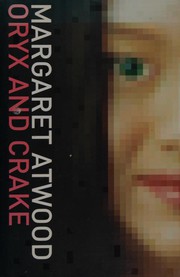 Margaret Atwood · 2003Oryx and CrakeLvl 6Fast paced
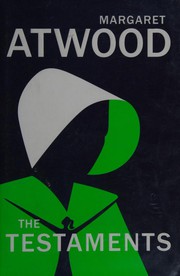 Margaret Atwood · 2019The TestamentsLvl 4Fast paced
 Octavia Butler · 1979KindredLvl 4Fast paced