
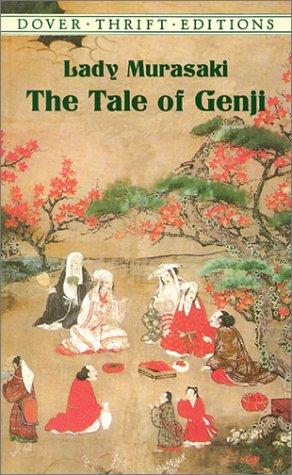
The Tale of Genji
Murasaki Shikibu · 973 CE–1014 · Japan
Originally Genji Monogatari (Japanese) · translated by Royall Tyler
Why it matters
A prince's decades of love affairs and political rise eventually give way to his descendants' more melancholic, diminished lives. Widely called the world's first novel: psychological interiority a thousand years before the form had a name for it.
At a glance
A vast court cast referred to by shifting titles rather than names, plus dense poem-exchanges, demand real patience.
Deep dive
Why one of this novel's most pivotal chapters survives only as a title with nothing written beneath it — and what a book obsessed with the ache of passing things gains by refusing to narrate its own biggest loss.
Written for readers who have finished the book. No plot recap, and nothing here is safe to read first.
Themes & symbolism
Mono no aware — the poignant, unresolvable ache of things passing — isn't background atmosphere here so much as the novel's ethical center: cherry blossoms fall, moons are viewed once and never again in the same way, lovers exchange a poem at dawn precisely because the night is already over. Genji's affairs are driven less by conquest than by a heightened, almost professional sensitivity to that transience, which makes him magnetic and makes him, repeatedly, the cause of other people's heartbreak — the novel holds both at once without resolving them into simple judgment.
The novel's most uncomfortable thread is Murasaki: Genji effectively adopts a ten-year-old girl because she resembles Fujitsubo, his father's consort and the great unconsummated love of his life, raises her in his own household to become exactly the wife he wants, and eventually marries her. The book treats this with real seriousness — Murasaki's own late-life grief and doubt about the position she's been shaped into are given extended, sympathetic interior space — without ever having a narrator step forward to condemn Genji outright. That refusal to moralize from outside the character is precisely what critics mean when they call this psychological fiction before the term existed.
Characters are mostly unnamed, referred to instead by court rank, residence, or a flower associated with them, which reflects a world where identity is relational and status-bound rather than fixed to a proper noun — and it's the poems exchanged between characters, thousands of them, that carry the story's actual emotional freight, functioning as the era's real medium of intimacy and negotiation. The claim that this is 'the first novel' rests less on any single plot mechanism than on this: people who reconsider themselves, regret, and change across decades, tracked with a granularity fiction elsewhere wouldn't attempt for another seven hundred years.
Kumogakure: A Death Left Blank
In the traditional manuscript ordering there is a chapter titled 'Kumogakure' — 'Vanished into the Clouds' — that survives only as a heading, with no text beneath it. Genji's death, the one event the entire second half of the novel has been quietly moving toward, is the single major occurrence the monogatari declines to narrate directly. Read as deliberate rather than lost, it's the text enacting its own aesthetic at the highest possible stakes: the moment mono no aware is most acute is exactly the moment language withdraws.
The Uji Chapters and a Refusal for an Ending
After Genji's death the narrative shifts to his nominal son Kaoru and his friend-rival Niou, both entangled with Ukifune in the final 'Uji chapters.' Torn between the two men, Ukifune attempts suicide, survives, and takes Buddhist vows rather than return to either of them — and when Kaoru finally tracks her down, she refuses to answer or see him. The monogatari ends there, on that refusal, without a closing scene of reconciliation or authorial comment tying anything off. Scholars have argued for centuries over whether this is Murasaki Shikibu's deliberate close — a woman finally exiting the marriage plot altogether — or evidence the work was left unfinished at her death; the text itself supports either reading equally well.
Where to go next
 Jun'ichirō Tanizaki · 1925NaomiLvl 4Fast paced
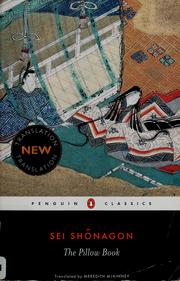 Sei Shōnagon · 1002The Pillow BookLvl 6Medium pace
 Ōgai Mori · 1911The Wild GooseLvl 3Slow burn
 Gabriele D'Annunzio · 1889The Child of PleasureLvl 6Slow burn
 Yukio Mishima · 1956The Temple of the Golden PavilionLvl 6Slow burn
 Yasunari Kawabata · 1947Snow CountryLvl 5Slow burn