
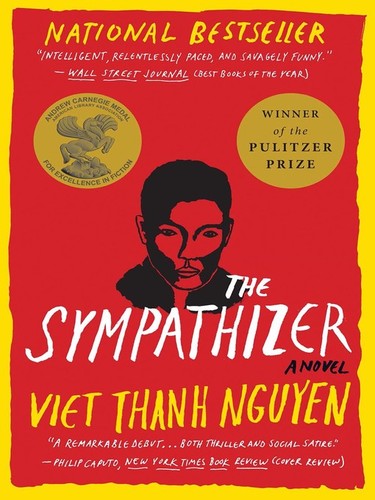
The Sympathizer
Viet Thanh Nguyen · b. 1971 · Vietnam / United States
Why it matters
An unnamed communist double agent embeds himself among South Vietnamese refugees in Los Angeles, then among the Hollywood crew restaging the war he fled. Nguyen's Pulitzer-winning debut narrates Vietnam's war from the losing, exiled side, espionage plot and searing satire fused into one confession.
At a glance
Dense, allusive, single-paragraph-spanning sentences and a slippery, dual-loyalty narrator demand close attention.
Deep dive
Why a man of 'two faces and two minds,' loyal to everyone and trusted by no one, spends his own coerced confession interrogating a slogan he once thought he understood: 'nothing is more precious than independence and freedom.'
Written for readers who have finished the book. No plot recap, and nothing here is safe to read first.
Themes & symbolism
The narrator's defining trait, announced on page one, is being 'a man of two faces' and 'two minds' — half-French, half-Vietnamese, a communist mole embedded so deep inside the anti-communist exile community he serves it with genuine loyalty. Nguyen builds the whole novel out of that doubleness rather than resolving it: the narrator sympathizes, in the word's full range, with everyone and is therefore fully trusted by no one, including himself, and the book's confessional frame — the entire novel is a coerced written confession addressed to an unnamed 'Commandant' — turns the Cold War spy-thriller genre into an interrogation of its narrator's own reliability rather than a vehicle for its plot.
The film-within-the-novel, an American director's Vietnam War epic shot with real Filipino extras standing in for Vietnamese villagers, is Nguyen's sharpest satirical set piece: it dramatizes how thoroughly the war's authorized narrative belongs to Americans, who get to reduce Vietnamese characters to screaming, wordless props in their own national catastrophe. The narrator's work as the production's cultural consultant, fighting losing battles over dialogue and dignity, makes literal what the whole novel argues, that the loser's side of a war doesn't just lose territory, it loses the right to narrate what happened to it — which is exactly the right this confession, however compromised, is trying to seize back.
The Movie Business as War by Other Means
The Hollywood chapters read as comic set pieces but carry the novel's angriest argument: the director restages napalm strikes and village massacres for spectacle while barely bothering to give his Vietnamese characters names, let alone lines, and the narrator's attempts to inject authenticity are treated as an inconvenience to be managed rather than expertise to be used. Nguyen stages the making of the war movie as a second colonization, American power rewriting a Vietnamese catastrophe into an American coming-of-age story, decades before anyone examines the actual battlefield again.
Man and Bon: Ideology Against Friendship
The narrator's two closest bonds run in opposite ideological directions and cost him equally: Bon, his blood brother, is a fiercely anti-communist former special forces soldier who never learns his best friend is the enemy he'd kill on sight, while Man, his other blood brother and communist handler, ultimately oversees the narrator's brutal re-education after the war. The friendship triangle is the novel's argument in miniature, that personal loyalty and political conviction are not the same allegiance and that the gap between them is where the narrator's entire life, and the region's history, actually happens.
The last seal: what actually happens, and why it lands the way it does.
The ending, explained
Returning to a reunified Vietnam, the narrator is captured by his own side and subjected to prolonged 're-education,' forced through repeated written confessions — the text of the novel itself — under the oversight of Man, now his interrogator as well as his oldest friend, in a process that strips away the narrator's remaining certainty about which side ever deserved his loyalty. He and Bon escape again as boat people, refugees a second time from the country the narrator helped 'liberate.' The novel closes by turning the real Ho Chi Minh slogan 'nothing is more precious than independence and freedom' inside out: after everything he's confessed to and survived, the narrator realizes that 'nothing' isn't a placeholder for some supreme value but a literal, terrifying emptiness — the actual condition he and his country are left holding.
Where to go next
 Joseph Heller · 1961Catch-22Lvl 6Medium pace
 Shehan Karunatilaka · 2022The Seven Moons of Maali AlmeidaLvl 6Fast paced
 Yiyun Li · 2009The VagrantsLvl 6Slow burn
 Joshua Cohen · 2021The Netanyahus: An Account of a Minor and Ultimately Even Negligible Episode in the History of a Very Famous FamilyLvl 6Medium pace
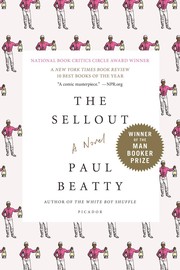 Paul Beatty · 2015The SelloutLvl 6Fast paced
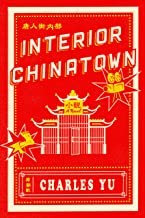 Charles Yu · 2020Interior ChinatownLvl 5Fast paced