
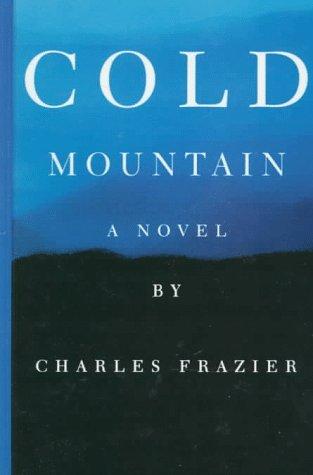
Cold Mountain
Charles Frazier · b. 1950 · United States
Why it matters
A wounded Confederate deserter walks home across a war-ravaged Appalachia in a journey modeled on Homer's Odyssey, alternating with the woman he loves fighting to keep his family's mountain farm alive. Frazier's National Book Award winner became a phenomenon, and rightly so.
At a glance
Richly physical, patient prose carries a long journey at an accessible, steady pace.
Deep dive
Why Frazier's Odyssey never lets its Penelope simply wait, and what it costs Ada to build a self that doesn't depend on a man's return.
Written for readers who have finished the book. No plot recap, and nothing here is safe to read first.
Themes & symbolism
The Homeric scaffolding is announced rather than hidden — a wounded man walking a ruined landscape toward a woman he barely knows, past a gallery of grotesques (a blind man, a goat-woman, a lecherous preacher) standing in for Circe and the Cyclops — but Frazier's crucial revision is Penelope's half of the book. Ada isn't waiting at a loom; she's failing at farm work until Ruby Thewes arrives and rebuilds her from the ground up, trading Ada's Charleston refinement for a competence the war has made the only currency that matters. The alternating chapters aren't just structure, they're an argument: Inman's odyssey is backward-looking, a soldier trying to walk out of what the war made of him, while Ada's is forward-looking, a woman learning to make a self that doesn't depend on a man's return.
Cold Mountain itself functions less as a destination than as a fixed idea Inman can navigate by, the way sailors use a star — the actual mountain barely appears, because the book's real subject is the gap between the home a man carries in his memory and the home that's still there, changed, when the war is over. Teague and the Home Guard supply the novel's darkest symmetry: they're not soldiers but neighbors, deputized cruelty that shows the war didn't stay contained on distant battlefields but hollowed out the civil order at home just as thoroughly, so that the most dangerous thing Inman faces isn't a Union regiment but Confederate law enforcement.
Ruby and the Ethic of Self-Sufficiency
Ruby, illiterate and raised by a feckless father she despises, becomes the novel's real moral center precisely because she owes nothing to the antebellum order Ada was raised inside. Her knowledge — when to plant, how to read weather, how to make a farm feed two women alone — isn't folksy color, it's the skill set that survives when a civilization built on slavery and gentility collapses. Ada's arc is measured entirely against Ruby's competence: the novel's happy ending, such as it is, belongs to the woman who never needed rescuing in the first place.
Desertion as Moral Clarity
Frazier is careful never to frame Inman's walking away from the front as cowardice; his wounds and his revulsion at Fredericksburg's slaughter read as the only sane response left to a man who has run out of reasons to keep killing strangers for a planter class he never had a stake in. That the novel's most sympathetic institution — the Confederate war effort — is the one its hero abandons was itself a quiet provocation in a genre still prone to Lost Cause nostalgia, and it's why the book's sympathies land so squarely with the deserters, the widows, and the women left to run farms rather than with anyone still fighting.
The last seal: what actually happens, and why it lands the way it does.
The ending, explained
Inman, having walked nearly the length of a collapsing Confederacy, finally reaches Cold Mountain and is briefly, wordlessly reunited with Ada — one night together after the entire novel has been organized around the possibility of this reunion. He is then shot and killed by Teague's Home Guard boys, an abrupt, almost anticlimactic death that refuses the reader the sentimental payoff the journey structure seems to promise. Frazier is explicit that this isn't tragic irony so much as historical honesty: the war kept killing men after any reasonable person would expect it to stop. An epilogue jumps years ahead to show Ada raising their daughter alongside Ruby's family, self-sufficient and unsentimental — the novel's actual ending isn't a marriage but a household of women who outlast the men's war.
Where to go next
 Jayne Anne Phillips · 2023Night WatchLvl 6Slow burn
 Anthony Doerr · 2014All the Light We Cannot SeeLvl 4Fast paced
 Homer · 725 BCEThe OdysseyLvl 6Fast paced
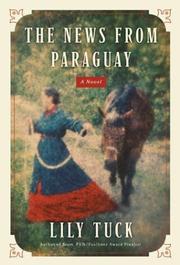 Lily Tuck · 2004The News from ParaguayLvl 6Medium pace
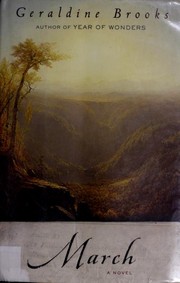 Geraldine Brooks · 2005MarchLvl 5Medium pace
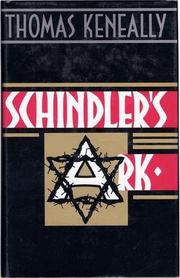 Thomas Keneally · 1982Schindler's ArkLvl 4Fast paced