
The Forsyte Saga
John Galsworthy · 1867–1933 · England
Why it matters
Three novels and two interludes track the Forsytes, a dynasty of upper-middle-class Victorians for whom possession is instinct, tested hardest by Soames's marriage to the one Forsyte asset he can never fully own: his wife Irene. The English family chronicle at full scale, indictment wrapped in upholstery.
At a glance
Traditional prose across nearly nine hundred pages and three generations of a large cast.
Deep dive
What it means for a family to treat love as a form of property law, and why the sins of one Forsyte generation get billed to the next.
Written for readers who have finished the book. No plot recap, and nothing here is safe to read first.
Themes & symbolism
Galsworthy builds the Forsytes around a single instinct — the compulsion to own, whether it's stocks, houses, or people — and Soames is its purest expression, a man who cannot distinguish a wife from an asset and who therefore cannot understand why Irene's unhappiness should count against his legal claim on her. The scene in which he forces himself on her is written entirely through euphemism, but the surrounding chapters make its logic explicit: Soames has done nothing, in his own accounting, but exercise a husband's right, and the horror of the book is that this accounting is not eccentric but simply Forsyte doctrine stated plainly.
Robin Hill, the house Soames commissions from Bosinney, is the novel's clearest symbol of the same instinct turned toward beauty: Soames wants to possess taste itself, to own a home Irene will love him for, and it's exactly this transaction — love purchased through property — that Irene and Bosinney's feelings for each other expose as hollow. The second generation replays the pattern almost exactly: Fleur, Soames's daughter, wants Jon the way her father wanted Irene, as something to be acquired by will, and the elder Forsytes' old grievance becomes an inheritance the children never agreed to accept.
Possession Across Generations
Galsworthy's real subject across the trilogy isn't Soames alone but the way his particular sickness — mistaking ownership for love — outlives him in structure if not in name. Fleur's doomed pursuit of Jon isn't punishment or coincidence; it's the same Forsyte logic operating on a new set of people, proof that the family's defining vice reproduces itself even in children raised to know better.
A Class Anatomized From Inside
Galsworthy wrote as a Forsyte himself, born into the same prosperous professional class he spends nine hundred pages indicting, and the saga's peculiar power comes from that closeness — there's no outside observer sneering at these people, only a novelist cataloguing his own tribe's instincts with a connoisseur's precision. Old Jolyon, Soames's uncle, is allowed a wisdom and generosity the younger generation lacks, functioning as proof that the Forsyte temperament isn't destiny, just the path of least resistance a family this comfortable tends to take.
Where to go next
 Guy de Maupassant · 1885Bel-AmiLvl 4Medium pace
 Ivan Turgenev · 1862Fathers and SonsLvl 3Medium pace
 E. Annie Proulx · 1993The Shipping NewsLvl 5Medium pace
 Grazia Deledda · 1913Reeds in the WindLvl 4Medium pace
 Roger Martin du Gard · 1940The ThibaultsLvl 6Slow burn
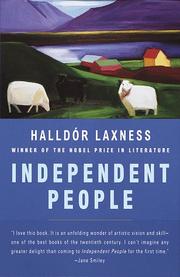 Halldór Laxness · 1934Independent PeopleLvl 6Medium pace