
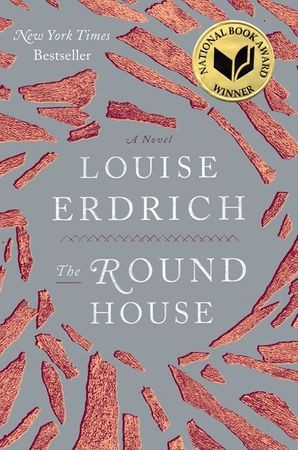
The Round House
Louise Erdrich · b. 1954 · United States
Why it matters
A thirteen-year-old boy investigates his mother's assault on tribal land, colliding with the jurisdictional maze that lets such crimes go unpunished. Erdrich's National Book Award winner fuses coming-of-age story with legal indictment.
At a glance
Clear first-person narration from a perceptive teenage narrator.
Deep dive
A thirteen-year-old sets out to find his mother's attacker and runs headfirst into the exact jurisdictional maze that lets men like him walk free — and Erdrich makes you sit inside that machinery long enough to feel why someone might stop trusting it.
Written for readers who have finished the book. No plot recap, and nothing here is safe to read first.
Themes & symbolism
The jurisdictional maze Joe uncovers while investigating his mother Geraldine's assault — whether the crime happened on tribal, state, or federal land determines which court, if any, has authority to prosecute, and the attacker Linden Lark exploits that exact ambiguity to walk free — is Erdrich's central, unsentimental argument rendered as plot mechanics rather than lecture: the novel doesn't just depict a miscarriage of justice, it makes the reader work through the actual legal machinery, drawn from real jurisdictional gaps that for decades left crimes against Native women on reservation land effectively unprosecutable, that produces it.
Geraldine's prolonged silence and trauma after the attack — she can't or won't say exactly where it happened, information that turns out to be the legally decisive fact determining whether Lark can be charged at all — makes her literal, protective withholding of location the story's central irony: the specific piece of information that would deliver justice is also the detail her trauma makes hardest to access, and Erdrich refuses to treat her recovery as simply instrumental to the plot's legal puzzle, giving her silence its own weight independent of what it would unlock.
Joe's coming-of-age runs directly through his loss of faith that legitimate institutions — his own father is a tribal judge, deeply committed to law as a genuine instrument of justice — can actually protect his mother, and the friendship between Joe and Cappy, forged through ordinary teenage mischief in the novel's earlier chapters, becomes the vehicle through which that disillusionment turns into action; Erdrich lets the reader feel both the moral force of Joe's eventual choice and its cost, refusing to romanticize vigilante justice even while making the legal system's failure to offer any alternative starkly, deliberately clear.
The Jurisdictional Maze Isn't Fiction
Erdrich builds the novel's plot directly around a real and, at the time of publication, still largely unresolved legal gap: decisions including Oliphant v. Suquamish Indian Tribe (1978) stripped tribal courts of criminal jurisdiction over non-Native defendants on tribal land, while the overlapping patchwork of tribal, state, and federal authority over reservation crimes left, and in many respects still leaves, non-Native perpetrators of violence against Native women able to exploit exactly the ambiguity that protects Lark in the novel. The Round House, awarded the 2012 National Book Award, was published in the middle of the real legislative fight over reauthorizing and strengthening the Violence Against Women Act's tribal provisions, and Erdrich has spoken about writing the novel partly to make that abstract jurisdictional failure legible as the lived, specific harm it actually is.
The last seal: what actually happens, and why it lands the way it does.
The ending, explained
With Lark protected by the jurisdictional gap and growing bolder in his continued threats against Geraldine, Joe and Cappy take matters into their own hands, tracking Lark to a golf course and shooting him, then staging the death to look like an accident — a plan Joe's father, Judge Coutts, seems to piece together without ever being told outright, and chooses, in the end, not to pursue. The novel closes with the two families driving cross-country together in the aftermath, an ordinary road trip folding a killing into the texture of everyday family life rather than staging any climactic reckoning, and Joe's final, spare narration — 'and I did not stop' — registers less as triumph than as the moment his childhood definitively ends: justice has been served in the only form actually available to him, at the cost of an innocence the law's failure made impossible to preserve any other way.
Where to go next
 Louise Erdrich · 1984Love MedicineLvl 6Medium pace
 Louise Erdrich · 2020The Night WatchmanLvl 5Medium pace
 Toni Morrison · 1987BelovedLvl 8Slow burn
 William Faulkner · 1930As I Lay DyingLvl 9Medium pace
 Eudora Welty · 1972The Optimist's DaughterLvl 4Medium pace
 Jesmyn Ward · 2017Sing, Unburied, SingLvl 5Medium pace