
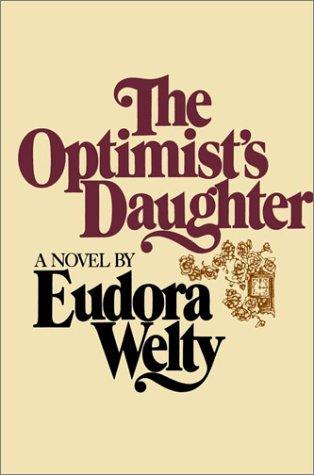
The Optimist's Daughter
Eudora Welty · 1909–2001 · United States
Why it matters
A woman returns to Mississippi to bury her father and confront his shallow young widow. Welty's Pulitzer winner turns grief and family ritual into luminous, economical Southern comedy and elegy.
At a glance
Controlled, elegant prose belies a quietly demanding meditation on grief.
Deep dive
A woman fights her father's tacky young widow over a house full of heirlooms, and Welty makes the argument over one scarred breadboard carry the weight of an entire inheritance of grief.
Written for readers who have finished the book. No plot recap, and nothing here is safe to read first.
Themes & symbolism
Judge McKelva's 'optimism' is really a genteel refusal to look at what's actually in front of him: he ignores his failing eyesight until it's dangerous, and Welty frames his hospital-bed death, holding his daughter's hand while thinking of someone else entirely, as the final expression of a lifelong habit of pleasant avoidance. Fay, the vulgar second wife he married late, isn't merely a bad match — she's the future arriving without reverence, a woman who wants the Mississippi house modernized and its rituals of mourning skipped, and the novel is careful not to let Laurel's contempt for her go entirely unchallenged.
Objects carry the family's real history once the people who could explain it are gone: Becky McKelva's writing desk, her breadboard hand-carved by Laurel's late husband, the fraying needlework and the birds nesting improbably in the chimney all function as a private archive competing against Fay's plan to simply clear the house out. The trapped chimney swift that panics through the house during the funeral vigil is Welty's cleanest symbol — the past literally loose in the rooms, frightening and impossible to tidy away, exactly like grief itself. Even the ritual of the Mississippi funeral, with its parade of visiting mourners and their competing stories about the Judge, becomes a form of communal archive-keeping that Fay, an outsider to the town's customs, simply cannot participate in — her exclusion from that ceremony is as telling as anything she says aloud.
What Laurel Lets Go
The novel's real drama isn't the funeral, it's the days after, when Laurel is alone in the house and finally reads her mother's old letters and confronts the full, harder truth of her parents' marriage — including Becky's own decline and the cruelty grief can produce in even loving families. Welty structures the book almost entirely around interior reckoning rather than incident, which is why its Pulitzer citation praised its economy: enormous emotional ground covered in scenes that, on their surface, are just a woman sitting in a room with old furniture.
Two Wives, Two Souths
Becky and Fay are less rivals in love than rival Souths: Becky, dead years before the novel opens, embodies a regional culture of memory, craft, and ceremonial grief — the kind that keeps a breadboard because a husband carved it — while Fay's impatience with mourning, her preference for modern conveniences over inherited things, marks a postwar Sunbelt South unsentimental about its own past. Welty, herself a lifelong Jackson resident who nursed her own mother through a comparable decline, refuses to let this contrast collapse into simple class snobbery: Fay's own family, glimpsed briefly and poor, complicates any easy reading of her as merely vulgar, and Laurel's late recognition of that complication is part of what lets her finally set the grievance down.
The last seal: what actually happens, and why it lands the way it does.
The ending, explained
In the novel's climax, Laurel and Fay clash directly over the breadboard, which Fay has scarred by cracking pecans on it with a nutcracker — to Fay a mere object, to Laurel a relic her late husband Phil carved with his own hands. Laurel nearly takes it for herself out of pure grievance, but stops: fighting Fay for possessions would mean adopting Fay's values, treating love as something you can hoard in a drawer. She leaves the breadboard behind and returns north to her own life, having concluded that memory doesn't need custody of objects to survive — it lives in her, portable, regardless of who ends up with the house. The optimism the title names finally belongs to Laurel, not her father: a clear-eyed acceptance of loss instead of his lifelong evasion of it.
Where to go next
 Eudora Welty · 1946Delta WeddingLvl 6Slow burn
 Eudora Welty · 1980The Collected Stories of Eudora WeltyLvl 4Medium pace
 William Faulkner · 1930As I Lay DyingLvl 9Medium pace
 Jesmyn Ward · 2017Sing, Unburied, SingLvl 5Medium pace
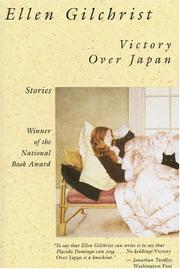 Ellen Gilchrist · 1984Victory Over Japan: A Book of StoriesLvl 3Medium pace
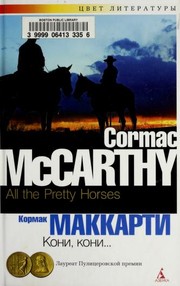 Cormac McCarthy · 1992All the Pretty HorsesLvl 6Medium pace