
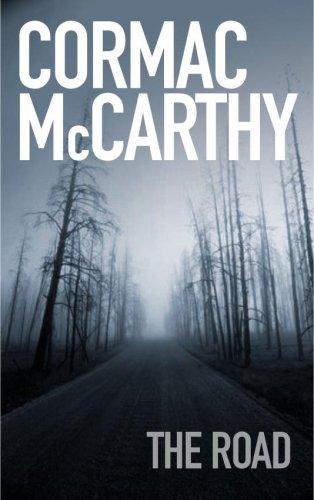
The Road
Cormac McCarthy · 1933–2023 · USA
Why it matters
A father, a son, a shopping cart, and an ashen world, 'carrying the fire' as the last ethics standing. McCarthy's darkness bent, at the end, toward love; Pulitzer and millions of shaken readers followed.
At a glance
Spare, punctuation-light prose reads quickly despite its bleak subject.
Deep dive
What 'carrying the fire' actually means to a father who can't quite define it for his son — and why McCarthy refuses to let the phrase resolve into anything as clean as a doctrine.
Written for readers who have finished the book. No plot recap, and nothing here is safe to read first.
Themes & symbolism
"Carrying the fire" is the novel's central image precisely because it resists definition — when the boy presses his father to explain what it actually means, the father can't give him more than reassurance, because it isn't a doctrine so much as a fiction the two of them need in order to keep refusing cannibalism and keep extending trust in a world that has stopped rewarding either. McCarthy withholds a clean answer on purpose: the fire's vagueness is the point, a near-religious commitment asserted rather than proved, sustained by repetition rather than evidence.
The boy's excess of empathy — wanting to help the thief who robbed them, wanting to feed the starving old man Ely, wanting to trust the family that appears at the very end — consistently pulls his harder, more pragmatic father toward greater generosity than the father would choose alone, reversing the usual direction of moral instruction between parent and child. The cannibal families and road agents they encounter function as the horrifying alternative version of exactly this relationship: fathers and families who have let survival fully cancel out the ethic the boy is being raised to protect, which is what makes the father-son pair's restraint read as radical rather than merely decent.
The absence of names — never 'the man' and 'the boy' called anything else, never a city, state, or year given — pushes the novel out of specific post-apocalyptic worldbuilding and into parable, a father and son standing in for the idea of a father and son rather than a documented pair of survivors. McCarthy withholds the cause of the catastrophe entirely, refusing readers even the comfort of a villain or an event to blame, which keeps the book's attention exactly where he wants it: not on what ended the world, but on what, if anything, is still worth protecting inside it.
A Language Stripped to the Bone
McCarthy's prose here is punctuation-light, dialogue unquoted, sentences frequently fragmentary — a style that enacts the depleted world it describes rather than merely narrating it. The one deliberate exception is the novel's final paragraph, a single lush, elegiac sentence about brook trout that once lived in mountain streams, patterned like a map of a world that made sense. Dropping that sentence's register so sharply after two hundred-some pages of austerity is a formal choice, not a lapse — it's the closest the book comes to admitting, in its own voice, what has actually been lost.
The last seal: what actually happens, and why it lands the way it does.
The ending, explained
The father dies from the illness or wound that's been slowly killing him throughout the novel, having given the boy everything he has left to give: the code, the fire, permission to keep going without him. He tells the boy he'll still be able to talk to him after he's gone. The boy waits by the body for days, as he's been taught, before a family — a man, a woman, children, a dog — appears, claiming to have been following them for some time, and offers to take him in. McCarthy keeps their trustworthiness genuinely ambiguous but leans the prose toward hope rather than dread, a calculated risk: full certainty either way would cheapen everything the novel has spent itself earning. The final paragraph's turn to trout in vanished mountain streams closes the book on loss at a cosmic rather than personal scale.
Where to go next
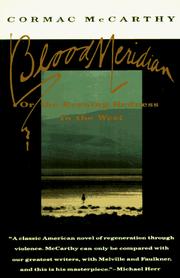 Cormac McCarthy · 1985Blood MeridianLvl 9Slow burn
 Cormac McCarthy · 1992All the Pretty HorsesLvl 6Medium pace
 William Faulkner · 1930As I Lay DyingLvl 9Medium pace
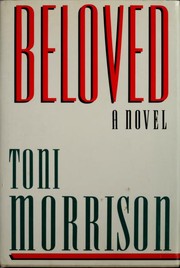 Toni Morrison · 1987BelovedLvl 8Slow burn
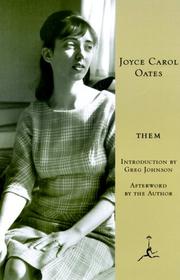 Joyce Carol Oates · 1969themLvl 6Medium pace
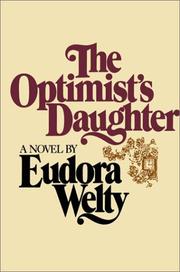 Eudora Welty · 1972The Optimist's DaughterLvl 4Medium pace