
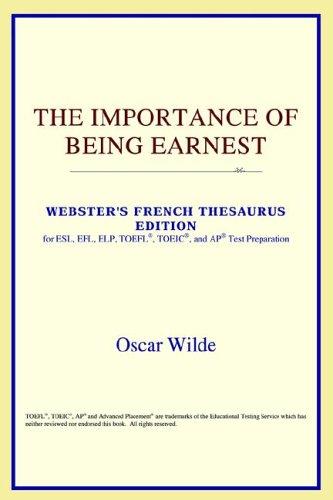
The Importance of Being Earnest
Oscar Wilde · 1854–1900 · Ireland
Why it matters
Wilde's final triumph before his fall: two bachelors invent fictitious alter egos to escape social duty, and the farce turns Victorian earnestness itself into the joke. The wittiest play in English, all surface and somehow all substance too.
At a glance
Fast, epigrammatic dialogue, but the plot and stakes stay light throughout.
Deep dive
Why two men both claim to be someone named Ernest, and what happens once the women who love them decide the name matters more than the man wearing it.
Written for readers who have finished the book. No plot recap, and nothing here is safe to read first.
Themes & symbolism
Jack Worthing and Algernon Moncrieff both maintain invented alter egos purely to escape social obligation: Jack's fictional wicked brother Ernest, supposedly in town, gives him an excuse to leave his country ward Cecily behind, while Algernon's invalid friend Bunbury, supposedly in the country, gives him an excuse to dodge his aunt's dinners. Wilde treats the lie not as a moral problem worth punishing but as ordinary social machinery, the same evasive fiction every character in the play is running, just less cleverly organized. That is the whole difference from Dorian Gray or the problem plays: nobody here has anything real to hide, so the deceptions carry no weight at all, and Wilde builds an entire farce out of that absence of consequence.
Gwendolen and Cecily both insist, independently and with total sincerity, that they could only ever love a man actually named Ernest, taking Wilde's favorite move, literalizing a metaphor, to its most ruthless extreme: earnestness, the great Victorian virtue of sincere, serious moral purpose, gets reduced to four letters on a christening certificate, something a man either happens to be named or does not, entirely detached from whether he is honest about anything. The joke works because the women are exactly as serious about the name as respectable society claims to be about the quality, and Wilde never once lets either of them notice the substitution.
Lady Bracknell's Checklist
Lady Bracknell's interrogation of Jack as a marriage prospect, income, address, parentage, whether he smokes, arrives in the same flat, escalating rhythm regardless of the answer's actual gravity, reducing the whole institution of Victorian courtship to an itemized audit. Her horror at Jack's origin, found as an infant in a handbag at Victoria Station, treats a foundling's misfortune and a smoking habit as comparable social defects, Wilde's cleanest joke about how thin the actual moral content of respectability turns out to be once you list its requirements out loud.
The last seal: what actually happens, and why it lands the way it does.
The ending, explained
The coincidence the plot has been quietly building toward finally surfaces: Miss Prism, Cecily's governess, confesses to having misplaced an infant in a handbag decades earlier while employed by Jack's family, which means Jack is not only that lost infant but Algernon's actual elder brother, and, checking the army lists his father was recorded on, discovers his given name was Ernest all along. Every fiction the play spent two acts building collapses into an accidental truth: the invented brother turns out to be real, the false name turns out to be genuine, and Wilde lets the resolution arrive through pure coincidence rather than earned insight on purpose, since a play this committed to trivializing earnestness was never going to reward anyone with a moral. Jack's closing line, that he has realized for the first time in his life the vital importance of being earnest, lands as the biggest joke in the play precisely because nothing he has learned resembles earnestness in any sense the word is normally asked to carry.
Where to go next
 Oscar Wilde · 1890The Picture of Dorian GrayLvl 4Medium pace
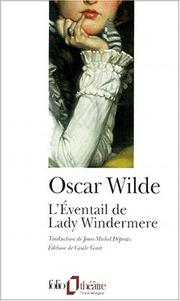 Oscar Wilde · 1892Lady Windermere's FanLvl 3Fast paced
 Oscar Wilde · 1895An Ideal HusbandLvl 3Fast paced
 Oscar Wilde · 1905De ProfundisLvl 5Slow burn
 Joris-Karl Huysmans · 1884Against Nature (À rebours)Lvl 7Slow burn
 André Gide · 1902The ImmoralistLvl 5Medium pace