
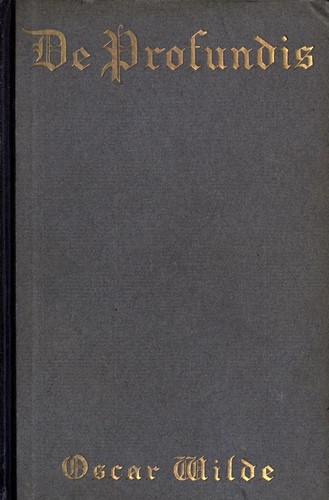
De Profundis
Oscar Wilde · 1854–1900 · Ireland
Why it matters
Written in Reading Gaol as one long, anguished letter to the lover who ruined him, Wilde's confession trades epigram for raw reckoning. Wit finally cracks open into suffering, and something like faith.
At a glance
Dense, emotionally raw prose freighted with biblical and literary allusion.
Deep dive
Wilde's prison letter to the man he still loved and squarely blames, and the argument it builds, in the same breath, for why the ruin may have been the one necessary event of his life.
Written for readers who have finished the book. No plot recap, and nothing here is safe to read first.
Themes & symbolism
Written across the early months of 1897 in Reading Gaol, handed over one page at a time by the governor and never actually delivered to its addressee, Lord Alfred Douglas, the letter opens as a ledger of specific grievances: Wilde catalogues years of Douglas's tantrums, extravagant demands, and reckless insistence on pursuing his own father's libel case, the very prosecution that handed the crown the evidence to try Wilde for gross indecency. This is not Wilde's famous wit turned on someone else; it is exact, wounded, and entirely serious, the first sustained prose he ever wrote with the performance of effortless charm simply switched off.
The letter's second half pivots from accusation to a new philosophy Wilde builds, in real time, out of the wreckage. Where his earlier aestheticism held that pleasure and beauty were the only things worth pursuing, De Profundis argues that sorrow is the supreme emotion of which a person is capable, and that suffering, honestly inhabited rather than resented, is the one remaining path back to a self he had spent a decade performing rather than living. He is not renouncing beauty; he is relocating it, arguing that humility, the last thing left in him and the best, is itself an aesthetic discovery as real as any epigram he wrote before Reading Gaol taught it to him.
Christ as the Supreme Artist
Wilde devotes a long, unexpected stretch of the letter to reading the Gospels as literature rather than doctrine, casting Christ not as a moral lawgiver but as an artist of the imagination whose real subject was sorrow, someone who understood suffering as material to be transfigured rather than simply endured. It is a reading built entirely out of Wilde's own aesthetic vocabulary carried into new territory, proof that even in ruin he was still thinking as a critic, still converting his own catastrophe into a text he could analyze.
A Letter That Took Sixty-Five Years to Reach Its Full Text
Wilde gave the manuscript to Robert Ross on his release, intending a copy to reach Douglas, who later claimed never to have read it. Ross published a heavily cut version in 1905 under the title De Profundis, stripping out nearly all the specific accusations against Douglas and leaving mostly the meditation on suffering. The complete, accurate text, restoring the letter's full anger alongside its full penitence, was not published until 1962, when Rupert Hart-Davis edited it directly from the original manuscript Wilde's estate had deposited at the British Museum.
Where to go next
 Oscar Wilde · 1890The Picture of Dorian GrayLvl 4Medium pace
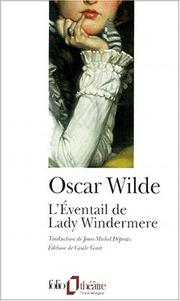 Oscar Wilde · 1892Lady Windermere's FanLvl 3Fast paced
 Oscar Wilde · 1895The Importance of Being EarnestLvl 2Fast paced
 Oscar Wilde · 1895An Ideal HusbandLvl 3Fast paced
 Joris-Karl Huysmans · 1884Against Nature (À rebours)Lvl 7Slow burn
 André Gide · 1902The ImmoralistLvl 5Medium pace