
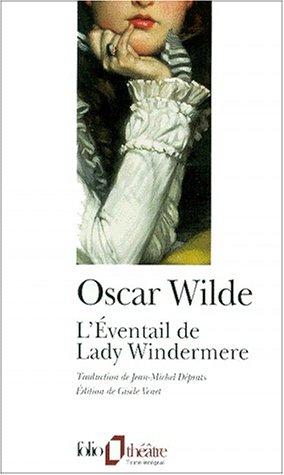
Lady Windermere's Fan
Oscar Wilde · 1854–1900 · Ireland
Why it matters
Wilde's first stage hit turns a young wife's near-scandal into a comedy about the gap between society's professed morals and its actual mercy. The drawing-room comedy he'd spend the decade perfecting.
At a glance
Conventional well-made-play structure, lightly complicated by Wilde's paradoxes.
Deep dive
Why the one truly selfless act in the play belongs to the woman everyone on stage would call irredeemable, and why she makes sure no one ever finds out she did it.
Written for readers who have finished the book. No plot recap, and nothing here is safe to read first.
Themes & symbolism
Wilde builds the play around a young wife's absolute moral confidence: Lady Windermere is a self-declared Puritan who tells Lord Darlington outright that she would strike a fallen woman across the face rather than shake her hand, and then spends the second half of the play nearly committing what her own code would call the identical sin, leaving her husband's house for another man's rooms over a jealousy she never bothers to verify. Wilde's structure is the argument: certainty about other women's failings is cheapest right before you discover how easily you could fail the same way yourself.
Mrs. Erlynne, the woman with a scandalous past whose reappearance in London threatens to expose a secret Lord Windermere has been quietly paying to protect, is written with more genuine feeling and sacrifice than anyone else on stage, and the dramatic irony, that the audience is invited to suspect Windermere himself of the affair when the truth is something else entirely, lets Wilde aim at his real target: a society whose whole vocabulary for sorting women into good and bad has nothing to do with who actually behaves well when it counts.
Wilde surrounds the central plot with a chorus of society wits, Cecil Graham, the Duchess of Berwick, who exist mainly to deliver the play's aphorisms about virtue, gossip, and the price of a good dinner, and that surrounding banter is doing real work rather than simply decorating the plot: it establishes, well before Mrs. Erlynne ever proves it in action, that the society passing judgment on her has never once organized itself around actual goodness, only around never being caught.
A Prop Wilde Trusts to Do the Talking
The title fan, a birthday present from Windermere to his wife, travels from ballroom to bachelor's rooms to a scene of near-exposure entirely through other people's decisions rather than its owner's. Wilde uses the object's blankness, a fan cannot testify to anything, to dramatize how thin the actual evidence behind a society scandal usually is, exactly the kind of ordinary object his later plays keep returning to: the more trivial the piece of material evidence, the more damage Wilde can show gossip doing with it.
The last seal: what actually happens, and why it lands the way it does.
The ending, explained
Cornered at Lord Darlington's rooms and about to be discovered by her own husband, Lady Windermere is saved when Mrs. Erlynne, who has followed her there specifically to head off the scandal, claims the forgotten fan as her own and lets herself be found in a position that ruins her reputation instead. She never tells Lady Windermere the reason for the sacrifice, that Mrs. Erlynne is in fact her long-lost mother and would rather be permanently exiled from her daughter's good opinion than let her learn the truth about either of them. Mrs. Erlynne accepts a comfortable, conventional marriage to the amiable Lord Augustus and leaves the country, and Wilde closes on Lady Windermere thanking a woman she still believes to be a stranger for a kindness whose full size she will never understand.
Where to go next
 Oscar Wilde · 1890The Picture of Dorian GrayLvl 4Medium pace
 Oscar Wilde · 1895The Importance of Being EarnestLvl 2Fast paced
 Oscar Wilde · 1895An Ideal HusbandLvl 3Fast paced
 Oscar Wilde · 1905De ProfundisLvl 5Slow burn
 Joris-Karl Huysmans · 1884Against Nature (À rebours)Lvl 7Slow burn
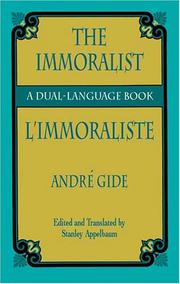 André Gide · 1902The ImmoralistLvl 5Medium pace