
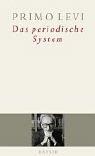
The Periodic Table
Primo Levi · 1919–1987 · Italy
Originally Il sistema periodico (Italian) · translated by Raymond Rosenthal
Why it matters
Twenty-one chapters, each named for an element, braiding chemistry, memoir, and the war into a singular form. Levi finds in matter itself a way to narrate a Jewish-Italian life across catastrophe.
At a glance
Chemistry conceits structure each chapter, demanding some scientific literacy.
Deep dive
Twenty-one chapters named for elements, mixing invented short stories with real chemistry and a survivor's memoir, arranged like Mendeleev's table into a shape that argues its own case for order.
Written for readers who have finished the book. No plot recap, and nothing here is safe to read first.
Themes & symbolism
Levi opens with 'Argon,' an essay on his own Piedmontese Jewish ancestors as chemically inert, prosperous, assimilated, and largely uninvolved in anything, before turning in 'Zinc' to the metaphor that runs under the whole book: pure zinc barely reacts with sulfuric acid, but zinc contaminated with the smallest trace of another element fizzes immediately, and Levi, a chemistry student under Mussolini's race laws when he first learns this, reads it as a direct argument against the fascist demand for racial purity. Impurity, not purity, is what makes a substance capable of change and a life capable of resistance, and the book states its thesis in a lab result before it ever reaches Auschwitz.
'Cerium' turns chemistry into currency inside the Buna synthetic-rubber camp attached to Auschwitz, where Levi and a fellow prisoner named Alberto steal rods of cerium-iron alloy from the laboratory, work them by hand into crude lighter flints, and trade the flints for bread that keeps them both alive for months. 'Vanadium' picks the same lab up decades later from the opposite side of a business letter: a shipment of resin from a German supplier forces Levi to recognize, in the firm's technical manager, Dr. Lothar Müller, the chemist who once supervised his slave labor at Buna. The two men correspond, cautiously and at length, about a professional problem while circling everything neither can quite bring himself to say about the camp; Müller writes an apology equal parts sincere and self-serving, proposes a meeting, and dies before it can happen.
Whether Twenty-One Elements Make a Novel
Levi treats some chapters as memoir and others as openly invented, and closes the book with 'Carbon,' the most fictional of all: a single carbon atom's account of its own two-hundred-million-year journey through limestone, a quarryman's pick, a vine leaf, a glass of wine, and dozens of further exchanges between rock, air, and living tissue, before it finally lodges in a cell in Levi's own brain and, in the book's last line, guides his hand to set down the final full stop of the sentence he is writing. Whether that makes The Periodic Table a memoir with fiction spliced in, a set of linked stories organized by an outside system, or something the periodic table's own mix of rigid order and endless variety was always going to produce, Levi leaves for the reader rather than the title page to decide.
Extracting Perfume From Chicken Droppings
'Nitrogen,' set years after the war, finds Levi running a small paint factory and taking on a bizarre commission: a manufacturer wants him to extract a cosmetic-grade amino acid from a mountain of hen excrement, a genuinely absurd assignment Levi narrates with the same patient technical precision he gives the Auschwitz chapters, refusing to let comedy and atrocity sit in separate registers of the same book. The joke lands because the method is real chemistry, not exaggeration, and the point sits right under it: survival, for Levi, meant going back to being exactly this kind of unglamorous, exacting professional.
Where to go next
 Primo Levi · 1947If This Is a ManLvl 4Medium pace
 Natalia Ginzburg · 1963Family LexiconLvl 4Medium pace
 Elsa Morante · 1974History: A NovelLvl 5Medium pace
 Cesare Pavese · 1950The Moon and the BonfiresLvl 6Slow burn
 Tove Ditlevsen · 1971The Copenhagen TrilogyLvl 4Medium pace
 Leonardo Sciascia · 1961The Day of the OwlLvl 4Fast paced