
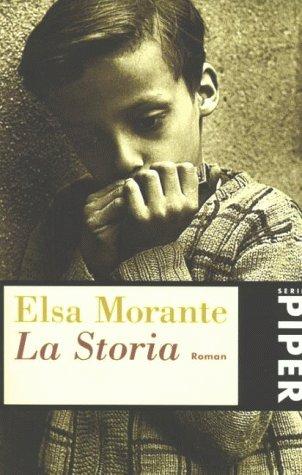
History: A Novel
Elsa Morante · 1912–1985 · Italy
Originally La Storia (Italian)
Why it matters
A half-Jewish schoolteacher and her child struggle to survive occupied Rome while the century's 'History' grinds on above them. Morante's furious insistence that great events are measured by their smallest victims.
At a glance
Documentary interludes interrupt a long, emotionally demanding wartime narrative.
Deep dive
A half-Jewish widow in occupied Rome tries to keep her family invisible enough to survive the war, and Morante interrupts her story every few pages with a list of everything the history books call important instead.
Written for readers who have finished the book. No plot recap, and nothing here is safe to read first.
Themes & symbolism
Ida Ramundo, a widowed schoolteacher hiding her Jewish ancestry to survive Mussolini's racial laws, is assaulted by a young German soldier, Gunther, on the eve of his deployment to the Eastern Front, and the child born from that assault, Useppe, becomes the novel's moral center, a boy whose epilepsy and radiant innocence exist entirely outside the political categories the adults around him are dying over. Morante refuses the reader any comfortable distance from the crime that produces him; Useppe is neither a symbol of hope redeeming the violence nor a permanent wound, just a child, loved without qualification by a mother too frightened to fully process what happened to her.
Ida's older son Nino swings across the whole ideological span of wartime Italy in the space of a few years, fascist true believer, black-market operator, partisan fighter, never settling into any of it as conviction so much as passing through each identity the way a teenager tries on a persona, and Morante uses his restlessness to argue that history's grand allegiances offer far less to the people living inside them than the history books later claim.
Morante prefaces each year of the narrative with a compressed, documentary-style summary of that year's atrocities and world events, a device deliberately at odds with the intimate, plain-style domestic scenes that follow, and the gap between the two registers is the book's whole argument: History, capitalized, autonomous, indifferent, grinds forward in the headnotes while Ida, Useppe, and Nino live and die at the ordinary, unrecorded scale the headnotes never mention them at.
Bella, Witness Without a Vote
Useppe's dog Bella, taken in as a stray, becomes the novel's most consistently loyal presence, staying near the boy through his seizures and Ida's mounting fear in scenes Morante writes with the same unsentimental attention she gives the human characters. Bella has no stake in the political history overwhelming the household and no way to intervene in it either, and Morante uses that helplessness deliberately: the dog's devotion is the only form of protection Useppe ever really gets, and it isn't enough.
The last seal: what actually happens, and why it lands the way it does.
The ending, explained
Nino dies first, killed in a motorcycle accident while running contraband, one more ideological identity discarded mid-transition rather than resolved. Useppe, left alone at home during one of Ida's absences, dies from an epileptic seizure with only Bella beside him, and Ida finds his body when she returns; the discovery breaks something in her that never mends, and she survives physically for years afterward but sinks into a silence the novel treats as a second, slower death. Morante closes with a final documentary-style note reaching past the narrative's own timeline, insisting the century's violence didn't end with Ida's story and had no intention of stopping there.
Where to go next
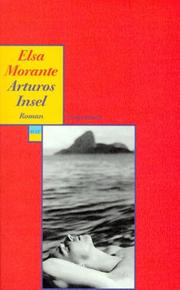 Elsa Morante · 1957Arthur's IslandLvl 5Medium pace
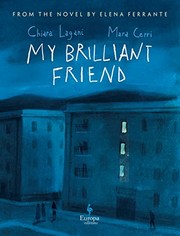 Elena Ferrante · 2011My Brilliant FriendLvl 3Fast paced
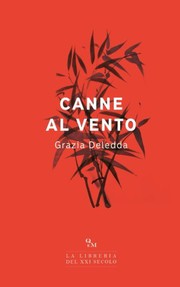 Grazia Deledda · 1913Reeds in the WindLvl 4Medium pace
 Giovanni Verga · 1881The House by the Medlar TreeLvl 6Slow burn
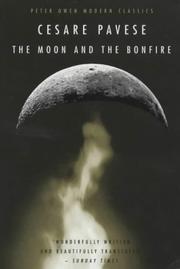 Cesare Pavese · 1950The Moon and the BonfiresLvl 6Slow burn
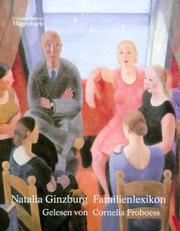 Natalia Ginzburg · 1963Family LexiconLvl 4Medium pace