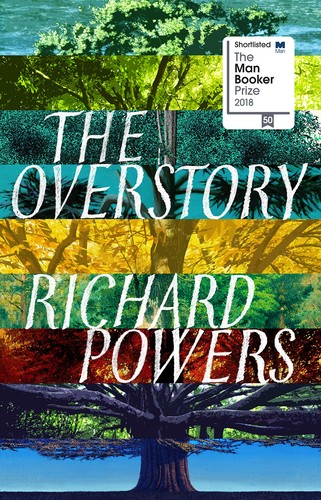
The Overstory
Richard Powers · b. 1957 · United States
Why it matters
Nine lives are radicalized, separately and then together, by their encounters with trees. An ambitious ecological epic arguing, structurally, that humans are not fiction's only characters that matter.
At a glance
Nine interwoven storylines and dense ecological digression.
Deep dive
Why a five-hundred-page novel about trees structures itself like one, and what the activists' campaign of sabotage actually costs the people who wage it.
Written for readers who have finished the book. No plot recap, and nothing here is safe to read first.
Themes & symbolism
Powers's boldest move is formal, not thematic: the novel is divided into "Roots," "Trunk," "Crown," and "Seeds," mimicking a tree's own anatomy, so that nine ostensibly separate character studies gradually fuse into shared plot before scattering back into consequence — the structure itself argues that individual human stories are subordinate branches of something larger and slower, exactly the decentering claim the book makes about human consciousness relative to plant life. Patricia Westerford, the dendrologist ridiculed early in her career for suggesting trees communicate and cooperate, functions as the novel's scientific conscience and its clearest self-portrait: an outsider insisting an entire field has been thinking at the wrong scale.
Each major character is "converted" by a tree encounter that reads almost as a religious experience — Nicholas Hoel's family chestnut, photographed once a month for nearly a century; Mimi Ma's mulberry; Douglas Pavlicek's fig, which saves his life in Vietnam — and the accumulation makes a case that reverence for trees isn't sentimentality but a corrected perception, a return to a relationship humans abandoned somewhere around the industrial revolution. Time itself is the novel's real subject: trees operate on a scale of centuries that dwarfs any individual activist's lifespan, and Powers structures long stretches of the book to feel correspondingly slow, forcing readers into something like arboreal patience before the plot's human urgency reasserts itself.
Nonhuman Personhood as Narrative Method
Powers doesn't just write about trees, he tries to write from a perspective adjacent to theirs — omniscient passages step back from any single character to render forests as networks, chemical signals, and mycorrhizal conversations that dwarf the human plots threading through them. It's a deliberate rebuke to the assumption, built into most fiction, that only human interiority merits sustained narrative attention, and the novel's critical reception often centered on whether this experiment succeeds or merely gestures at succeeding — a debate the book itself seems to welcome as part of its argument.
The Limits of Individual Witness
Patricia's late-career turn toward seed banking — patiently archiving genetic diversity against a collapse she expects to outlive any activism — and Nick's return to land art, arranging materials into massive earthworks visible only from above, both function as answers to the novel's activist thread: if direct action's costs are severe and its victories uncertain, these quieter, generational forms of stewardship offer another register of resistance, one measured in centuries rather than news cycles.
The last seal: what actually happens, and why it lands the way it does.
The ending, explained
The activist strand escalates from tree-sits into sabotage against logging operations, and the consequences are severe: one member of the group, Olivia, dies during the campaign, and others face imprisonment or lives permanently altered by what direct action cost them, legally and personally. Powers refuses to romanticize the escalation — it doesn't save the forests it targets, and it fractures the group that undertook it. What the novel offers instead, in its final movements, are quieter, longer forms of ecological witness that continue after the activism ends: Patricia's seed preservation work and Nick's land art both insist that meaningful response to catastrophe doesn't require spectacle, just scales of attention most human lives aren't built to sustain.